
Note to readers
While this website was created to support the sharing of our two properties in the Riviera Maya, over time we have expanded our blog far beyond the traditional tourist guide. We view this expansion as essential to develop a better understanding of Mexico and Latin America, its culture and people at times when there is a concerted effort by supremacists to belittle Latin Americans and to impose a vindictive and inhumane policy approach that seeks to minimize human dignity.
At times like this, it is imperative for righteous people to unite and to show that failed historical attempts to impose these doctrines of hate will fail one more time. This is why we will redouble our efforts to describe the unique beauty, culture, or spirit of people from Latin America. Latin American countries are diverse in culture, geography, and people, and beauty is often appreciated both in terms of physical appearance and inner qualities, such as warmth, resilience, and passion.
This is also why we will continue to highlight our resistance to hate from the perspective of the arts, and the lens of culture and social development. The planet is small and we deserve nothing less.
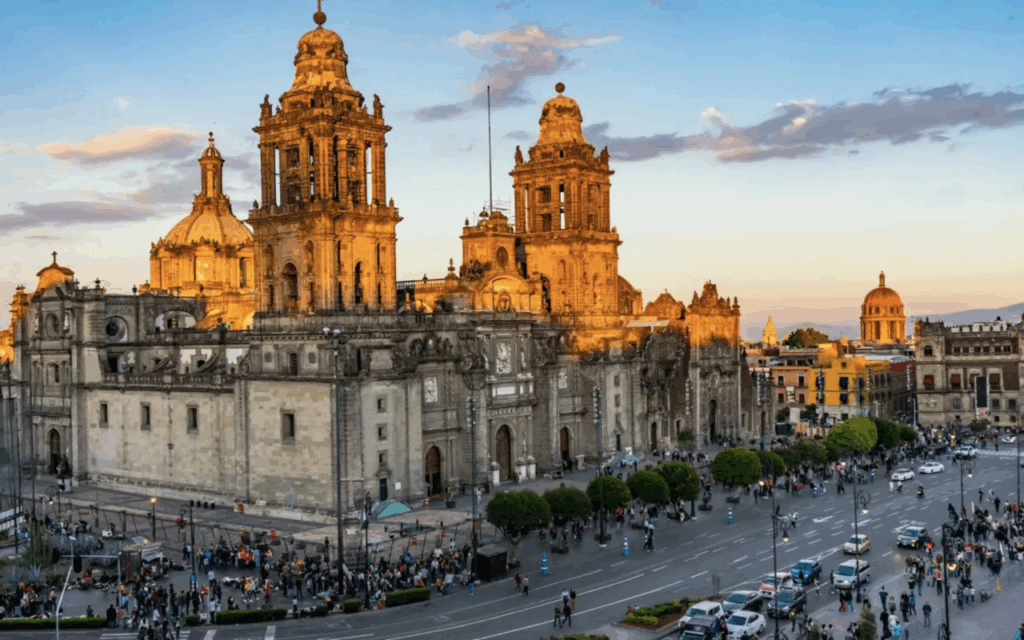
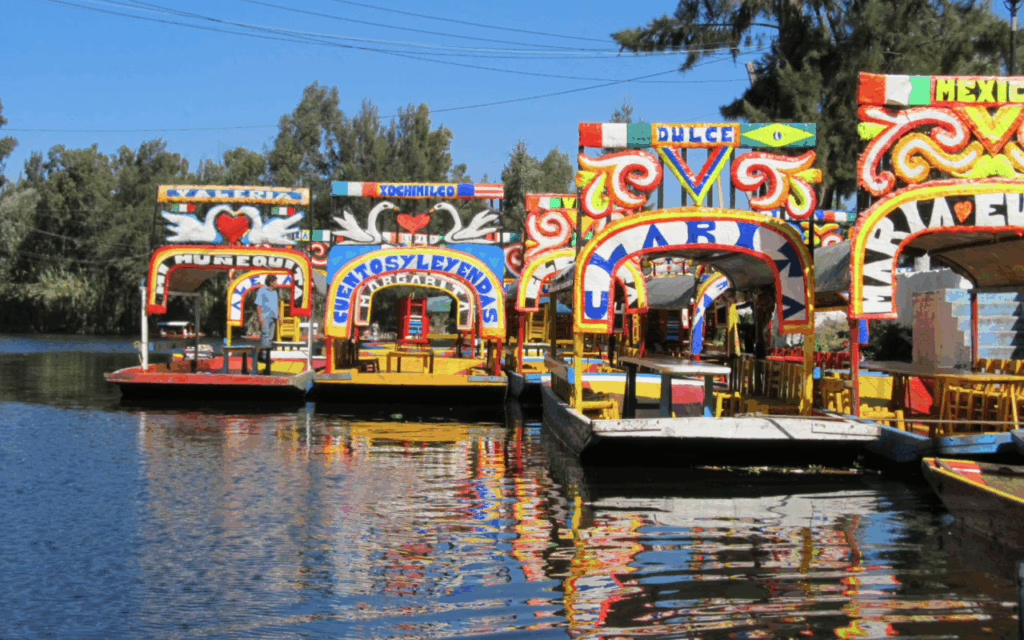
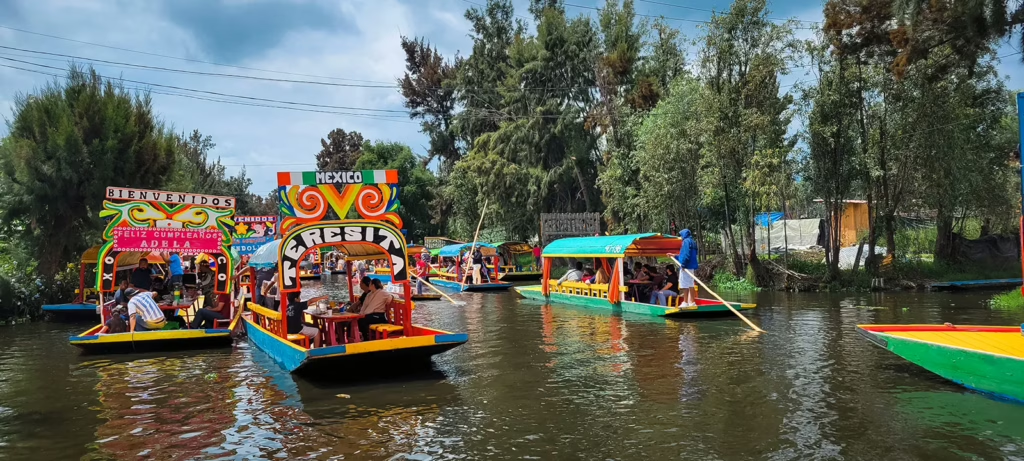
Mexico: A Nation of Culture, History, and Resilience
Mexico, officially known as the United Mexican States (Estados Unidos Mexicanos), is a vibrant and diverse country located in the southern part of North America. Bordered by the United States to the north and Guatemala and Belize to the south, Mexico is a land of striking contrasts — from vast deserts and tropical rainforests to ancient ruins and bustling modern cities. With a population of over 130 million people, it is the most populous Spanish-speaking country in the world and one of the most culturally influential nations in the Americas.
A Rich Historical Legacy
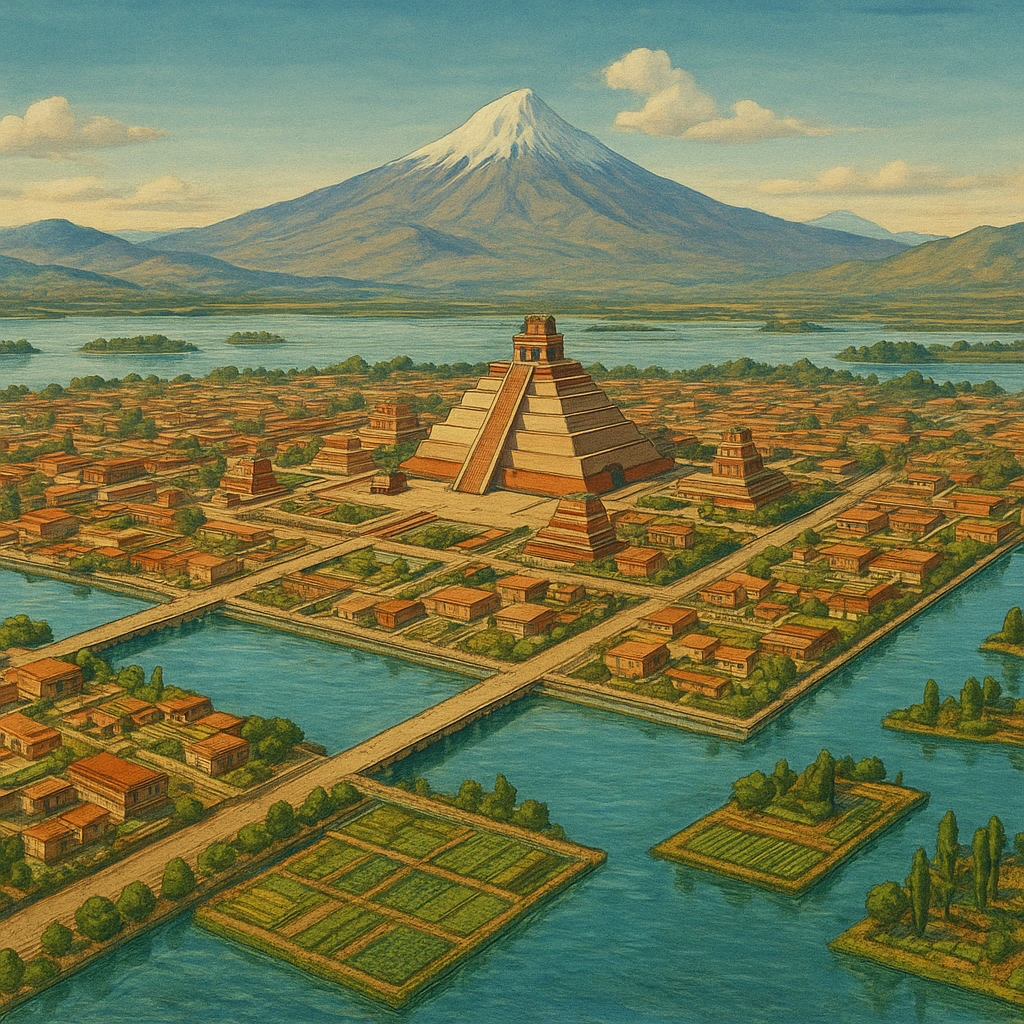
Mexico’s history stretches back thousands of years, long before the arrival of Europeans. It was home to several advanced civilizations, including the Olmecs, Mayans, and Aztecs, who left behind impressive architectural and scientific achievements. The Aztec capital, Tenochtitlán, built on what is now Mexico City, was one of the most sophisticated cities of its time.
In 1521, Spanish conquistador Hernán Cortés led the conquest of the Aztec Empire, marking the beginning of over 300 years of Spanish colonial rule. The struggle for independence culminated in 1810 with the Grito de Dolores, led by Miguel Hidalgo y Costilla, and Mexico officially gained independence in 1821. Since then, the country has experienced revolutions, reforms, and a journey toward democracy.
Cultural Wealth and Identity
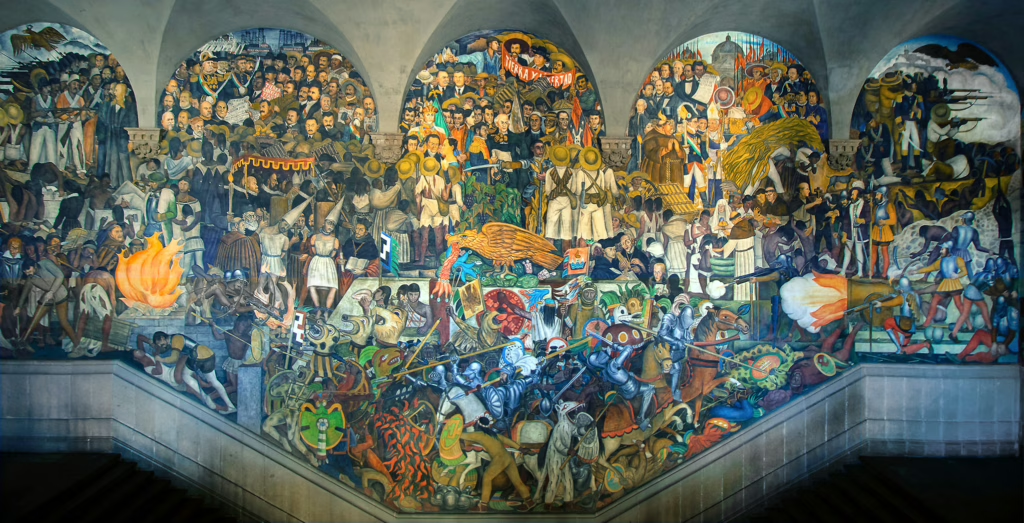
Mexico’s culture is a unique blend of indigenous traditions and Spanish influences, producing an identity that is both deeply rooted and ever evolving. Renowned artists such as Frida Kahlo and Diego Rivera captured the struggles and beauty of Mexican life through their work, while mariachi music, folk dances, and traditional crafts remain symbols of national pride.
Mexican cuisine, recognized by UNESCO as an Intangible Cultural Heritage of Humanity, is a reflection of the country’s diversity. Dishes like tacos, tamales, mole, and pozole highlight regional flavors and centuries of culinary evolution. Ingredients such as corn, chili, and chocolate — all native to Mexico — have shaped global cuisine.
Natural Beauty and Biodiversity
Geographically, Mexico is one of the most biodiverse countries in the world. It features stunning landscapes, from the Sierra Madre mountains and Copper Canyon to the Yucatán Peninsula and Baja California coastline. Its ecosystems support thousands of species of plants and animals, some found nowhere else on Earth. Mexico’s national parks and protected areas play a vital role in global conservation efforts.
Economy and Modern Development
Mexico has the second-largest economy in Latin America, driven by manufacturing, agriculture, and a growing technology sector. It is a member of the Canada–United States-Mexico Agreement (CUSMA), which strengthens trade ties with its North American neighbors. Tourism is also a major contributor, attracting millions of visitors each year to destinations like Cancún, Chichen Itzá, Mexico City, and Oaxaca.
Despite its progress, Mexico faces challenges such as social inequality and security issues. However, the country continues to make strides in education, renewable energy, and cultural preservation.
A Nation Looking Forward
Mexico stands as a bridge between the ancient and the modern, tradition and innovation. Its people — known for their warmth, creativity, and resilience — continue to shape the nation’s destiny with pride and determination. As the world becomes increasingly interconnected, Mexico’s cultural and economic influence continues to grow, solidifying its place as a global leader in art, cuisine, and human spirit.
Poetry of Mexico
Jaime Sabines (Chiapas, 1926 – Mexico City, 1999)
Jaime Sabines used everyday places like streets, courtyards, and hospitals to transform literature into reality. This is how he became a great Mexican poet, writer, and politician.
Jaime Sabines was born on March 25, 1926, in Tuxtla Gutiérrez, Chiapas. He came from a cultured family connected to Mexican history and politics. His parents were Julio Sabines from Lebanon and Luz Gutiérrez from Mexico.
"The Moon"
by Jaime Sabines

You can take the moon in spoonfuls
or in tablets once every two hours.
It works as a hypnotic and a sedative
and also provides relief
for those who have an overdose of philosophy.
A piece of moon in your pocket
is a better charm than a rabbit's paw:
it helps to find someone to love,
to be rich without anybody knowing
and keeps doctors and hospitals away.
You can give it as a dessert to children
when they can't get to sleep,
and a few drops of moon in the eyes of the old
help to die well.
Put a tender moon leaf
under your pillow
and you will see what you would like to see
and always carry a little bottle of moon air
for when you feel you're suffocating
and give the moon's key
to prisoners, and the disenchanted.
For those sentenced to death
and those condemned to life
there is no better tonic than the moon
in precisely measured doses.
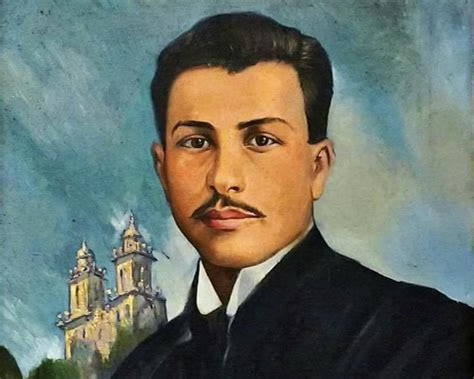
Ramón López Velarde (June 15, 1888 – June 19, 1921) was a Mexican poet. His work was a reaction against French-influenced modernismo which, as an expression of a purely Mexican subject matter and emotional experience, is unique. He achieved great fame in his native land, to the point of being considered Mexico’s national poet.
"La Suave Patria"
by Ramón López Velarde

"Oh, the homeland, gentle and warm,
She gives birth in pain and cries,
But she is strong, always standing,
In the face of turmoil and lies."
Submit your review | |