Tag: music

  • Mapuches

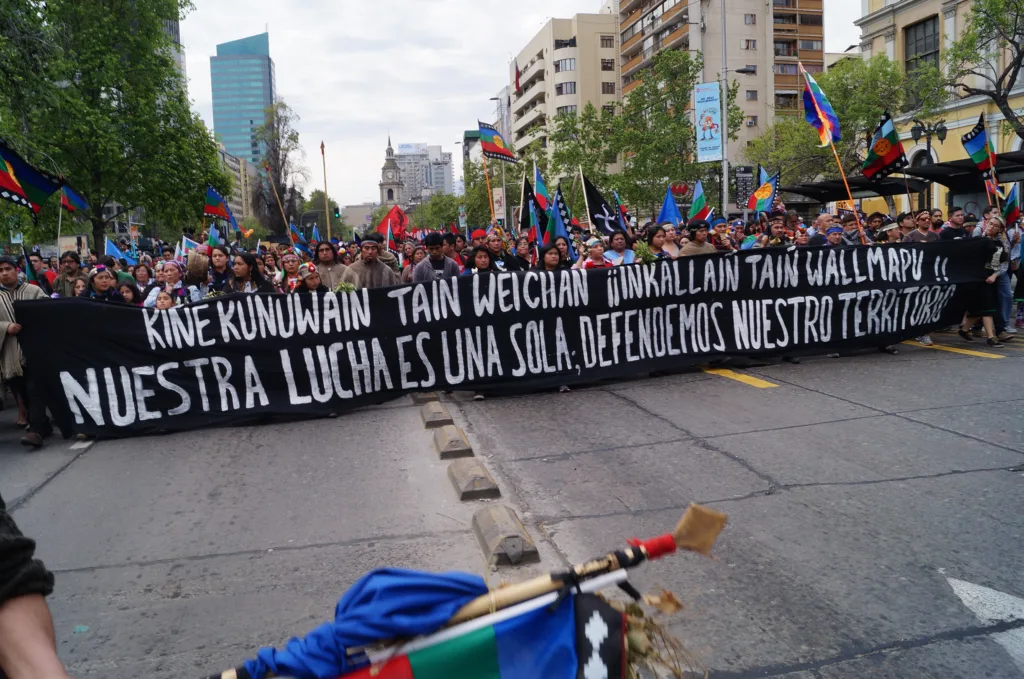
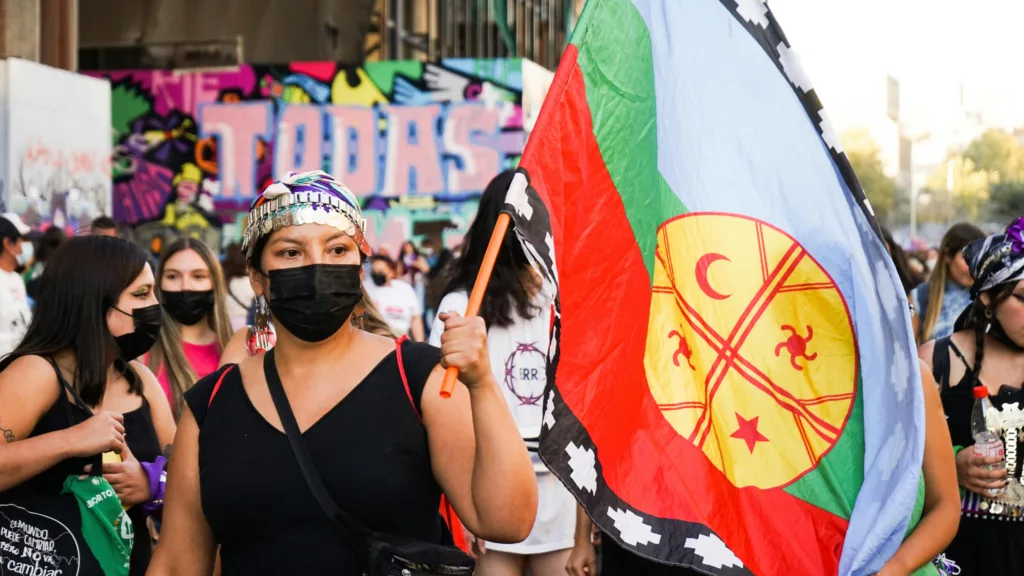
    Demo Presidente (laizquierdadiario.cl)

    Mapuches (meaning Mapu-Land, and Che-people) are indigenous to South America, sharing areas of southern Chile and Argentina–Mapuche territory stretches from the central region to the south of Chile, covering parts of the Araucanía and Los Ríos regions. At closed to 1.8 million people, Mapuches are the largest Indigenous population in the Americas.

    Historically known as Araucanos, Mapuches are one of three nations that cohabited the same region—the other two are Pihuelche and Huilliche.

    Social Structure

    The Mapuche social structure is both flexible and hierarchical, emphasizing kinship, community responsibility, and leadership. The Lof or Cavi (extended family group) is central to the Mapuche social structure. Each lof is typically composed of multiple families linked by blood, marriage, or adoption, who share communal land and responsibilities. The lof functions as an economic and social entity. Within the lof, Machis (traditional healers and religious leaders) hold significant authority, guiding decision-making and resolving disputes.

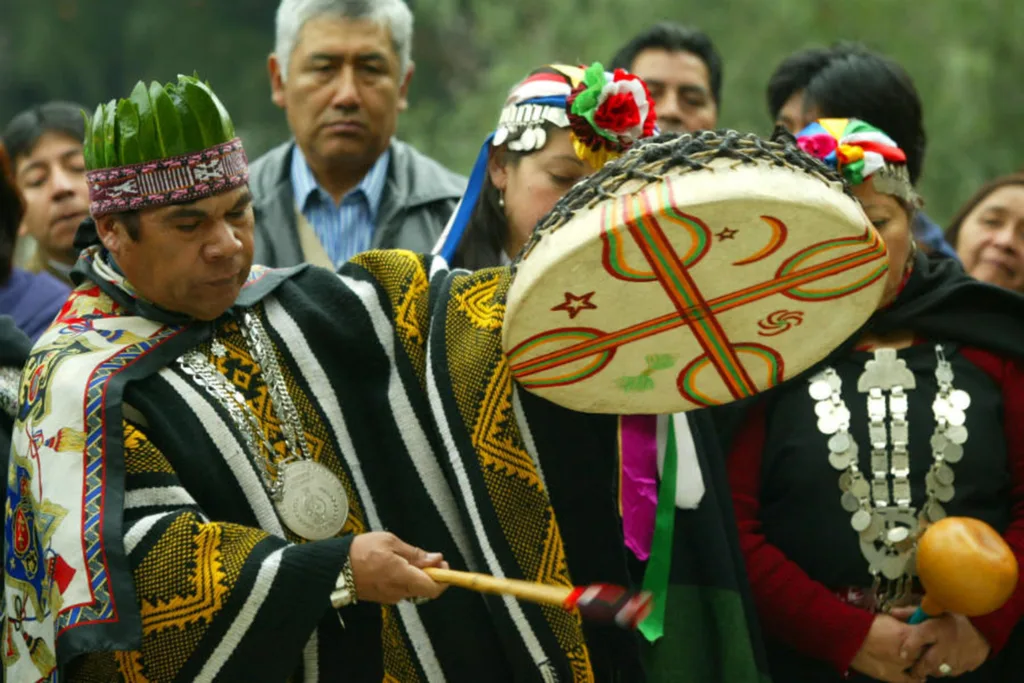
    The lof is also the building block of larger social formations. Multiple lof units form a rehue, a territorial and ritual grouping that binds several families together through shared spiritual practices, particularly those associated with the Nguillatun–the most important ceremony that invokes fertility, health, and balance. These ceremonies reinforce the Mapuche Cosmo-vision of social bonds and collective responsibility, reflecting the principle that individual well-being is intrinsic to communal welfare.
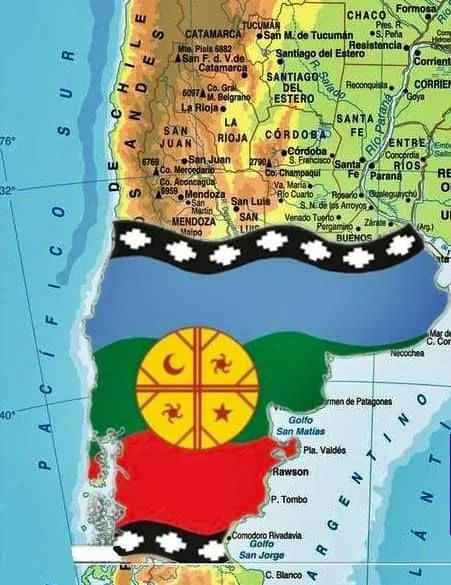
    Mapuland (amity tours)
    Map courtesy of Amity-Tours

    Leadership and Authority

    Leadership is based on wisdom, experience, and proven capability rather than rigid hierarchy. At the lof level, the lonko (chief) serves as the primary authority figure. The lonko is often an elder who represents the family group in negotiations, resolves conflicts, and ensures that traditions and customs are upheld. Selection of a lonko is typically consensual, relying on recognition of leadership qualities rather than inheritance alone.

    In larger societal scales, lonkos form a council to make decisions affecting multiple lofs, particularly during times of crisis or war. This structure allowed the Mapuche to resists the Inca and later Spanish colonial forces. The council seamless demonstrates the intrinsic dynamics between social cohesion and political organization. Notwithstanding this coordinated leadership, Mapuche society remained decentralized, valuing autonomy and local decision-making.

    The Mapuche and the Spanish Colonization

    Mapuches have a long history of resistance to external forces. They successfully resisted the Spanish colonization, maintaining their independence during the colonial period. The Arauco War (1536–1818), a prolonged military conflict between the Mapuche and the Spanish, was one the longest resistance movement in the Americas. Among the most notable feats of this war is the great rebellion of 1598–1602, which ended with the temporary expulsion of the Spaniards from certain Mapuche regions. Despite the military superiority of the conquerors, the Mapuche resistance stood out for its bravery and organization, which slowed the Spanish advance in the territory.

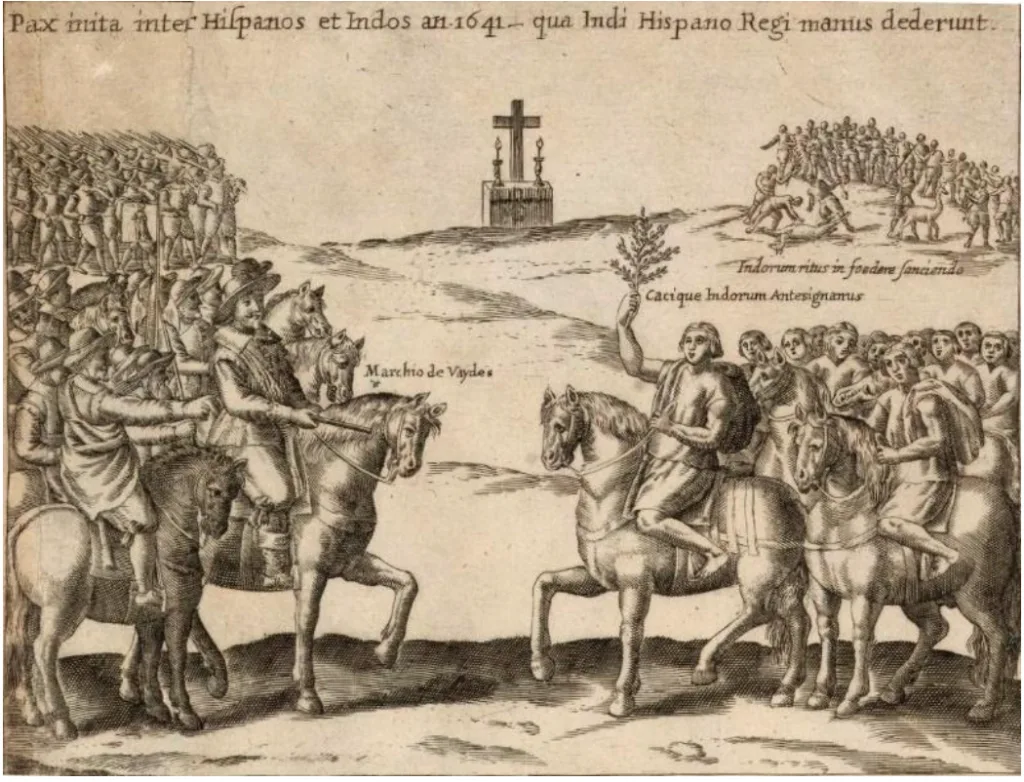
    Treaty of Quillén (1641)

    In 1641, the Spanish Crown recognized Mapuche territorial rights through the Treaty of Quillén, marking a ceasefire and a diplomatic agreement between the Conquistadores and the Mapuches in southern Chile. The treaty, however, was limited in its application and was ultimately violated as the Spanish expansion continued. Notwithstanding, Mapuches were able to retain autonomy over a large portion of their ancestral lands, but the relationship between the Mapuche and the Spanish remained fraught with conflict.

    Key points in the Treaty of Quillén:

    • End of hostilities: Ending a long period of war between the Spanish and the Mapuche, bringing peace to the region.
    • Mapuche autonomy: Guaranteed the Mapuche a large degree of autonomy over their territories, recognizing their right to govern their lands according to their own laws and customs.
    • Respect for cultures: Fostering mutual respect for the cultures, allowing both parties to co-exist while maintaining their distinct identities.
    • Diplomatic model: This treaty is often cited as an example of successful diplomacy, where dialogue and negotiation prevailed over military confrontation.

    Treaty of Tapihue (1825)

    Chilean independence was declared on September 18th, 1818, following the Spaniard defeat in the Battle of Maipú. The nascent Chilean government moved to consolidate its power and this led to a period of uncertainty between the Mapuche people and the emerging Chilean state.

    The Treaty of Tapihue, signed on January 7, 1825, marks a moment of peace and cooperation between the Chilean authorities and the Mapuche people. The treaty strengthened diplomatic relations and promoted peaceful co-existence after a period of conflict.

    Key points in the Treaty of Tapihue:

    • Mutual recognition: The treaty established mutual respect between the two parties, with official recognition of the territories and rights of the Mapuche.
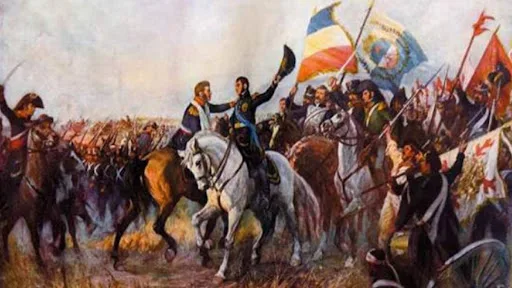
    El abrazo de Maipu
    The “Embrace of Maipú” between José de San Martín and Bernardo O’Higgins, after the victory in the Battle of Maipú
    • Peace and stability: By signing this treaty, both sides ended decades of conflict, thereby promoting peace and stability in the region.
    • Trade and commerce: The Treaty paved the way for trade and cultural exchanges, benefiting both communities and strengthening economic ties.

    These two treaties are central to the development of the Kingdom of Araucania and Patagonia and its Constitution, written by Orélie-Antoine I and the Mapuche Parliament. Differing from experiences like Canada, where treaties were reaffirmed by the Crown and were brought into common-law, the Mapuche experience with treaties and agreements is fraught with broken promises, failed negotiations, and continued resistance to this day.

    The Post-Colonial Period: The Chilean State and Mapuche Lands

    After Chile declared its independence from Spain in 1818, the new Chilean government sought to consolidate its control over the entire territory, including the Mapuche territories in the south of Chile. This process led to the Pacification of Araucanía (1851–1883), a genocidal military campaign in which the Chilean state forcibly took control of Mapuche lands. Mapuche people were subjected to violent repression, and their territories were gradually annexed by the Chilean state.

    During this colonizing period, the Mapuches lost significant portions of their ancestral lands, resulting in displacements and segregation to small plots of land. The Chilean government justified this land appropriation through a legal framework that ignored or dismissed Mapuche land rights. Many Mapuche communities, despite facing violence and dispossession, resisted (and continue to resist) the loss of their lands.

    The “Boundary Treaty” of 1881

    In 1881, during the Chilean consolidation of control over southern Chile, Chile and Argentina signed the Treaty of 1881 (November 12, 1881). The treaty was signed following a failed revolt by Mapuches, who sought securities for their land an culture. The agreement was controversial and not universally accepted and it failed to protect the Mapuche people’s ancestral lands in the long term.

    In Chile, the Treaty of 1881 essentially formalized the loss of Mapuche territory under the auspices of Chile’s sovereignty. It divided Mapuche lands into parcels and sought to integrate the Mapuche population into the Chilean economy, but in practice, it led to a reduction in the size of their territory. The Mapuche viewed it as a dismantling of their sovereignty and many Mapuche leaders never accepted the terms of the treaty.

    Modern Day: Land Conflicts and Mapuche Autonomy

    In the modern context, the issue of the Mapuche and their lands remains one of the most contentious topics in Chilean politics. Following the end of the military dictatorship of Augusto Pinochet (1973–1990), the Chilean government recognized the importance of addressing Indigenous rights, but the solutions offered have often been inadequate or ignored by both the state and the private sector.

    The Post-Pinochet Legal Framework: One of the main pieces of legislation that addresses the rights of Indigenous peoples in Chile is the Indigenous Law No. 19,253 (1993), which recognizes the rights of Indigenous people to their ancestral lands and grants them some degree of cultural and political autonomy. However, critics argue that the law has been insufficient in addressing the underlying issues of land restitution and full autonomy.

    The Land Conflict and the Role of the State

    Return of land, or Wallmapu, remains central to the ongoing Mapuche resistance. Land once held by the Mapuche has been appropriated for logging, agricultural, and mining projects, with little regard for the rights of the Indigenous people, and notwithstanding the Chilean ratification of the United Nations Declaration on the Rights of Indigenous Peoples (UNDRIP). Much of this land is now owned by large private corporations or the Chilean state.

    Mapuche people rightly argue that the Chilean state has failed to honour past agreements and promises to return their ancestral lands. They view this failure as a breach of trust and ongoing colonization. Mapuches experience high levels of poverty and marginalization and they argue that this a direct consequence of the state’s policies of land appropriation and economic exploitation.

    The Role of the Mapuche Autonomous Movement

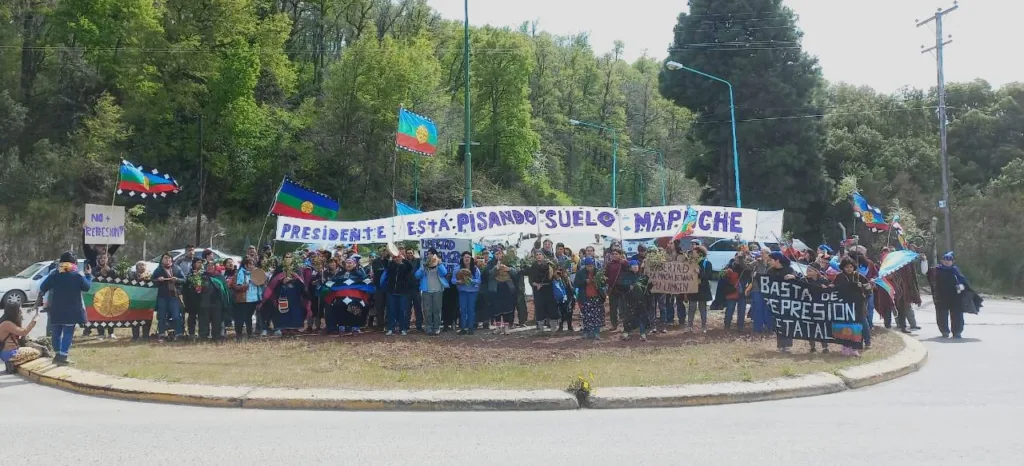
    The Mapuche Autonomous Movement (or Mapuche Resistance) has become a central force in demanding self-determination, the return of lands, and the recognition of Mapuche culture and language. The movement advocates for the creation of an autonomous Mapuche territory and for recognition of the Mapuche people’s right to govern their own lands.

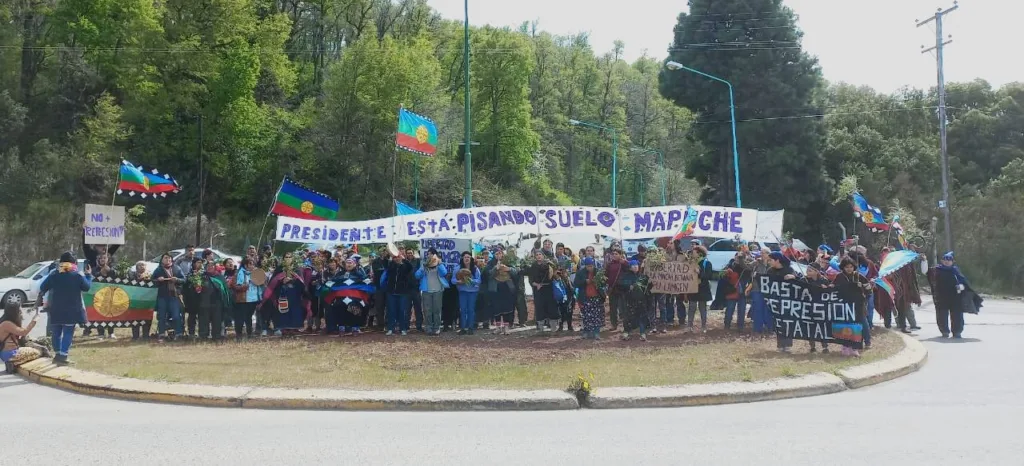
    The movement has used various tactics, from peaceful protests to more confrontational actions like land occupations, road blockades, and attacks on logging and agricultural industries that are seen as exploiting Mapuche land. These tactics have led to tensions with the Chilean government, which has at times responded with military force and heavy policing.
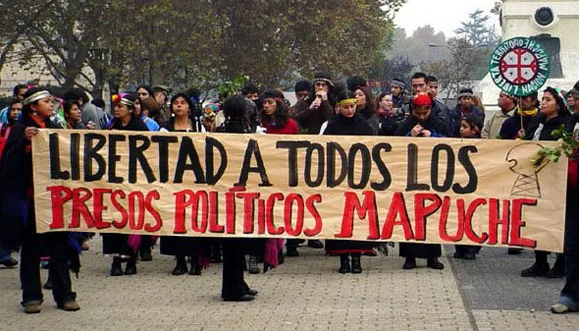
    Libertad para presos politicos

    Recent Developments: The 2020 Constitutional Process and the Mapuche

    In 2020, Chile embarked on a constitutional reform process, which was sparked by widespread protests against inequality, corruption, and neoliberal economic policies first implemented under the Pinochet dictatorship. Indigenous rights were an important aspect of the country-wide protests.

    In 2021, a significant step forward was made when a Mapuche woman, Elisa Loncón, was elected president of the Constituent Assembly, which is tasked with drafting the new constitution. This was a historic moment for the Mapuche people, as they were given a direct voice in the national constitutional process. Sadly, following an intensive campaign of fear and misinformation by the Chilean state, the media, and financial interests, the proposed constitution was defeated in a plebiscite.
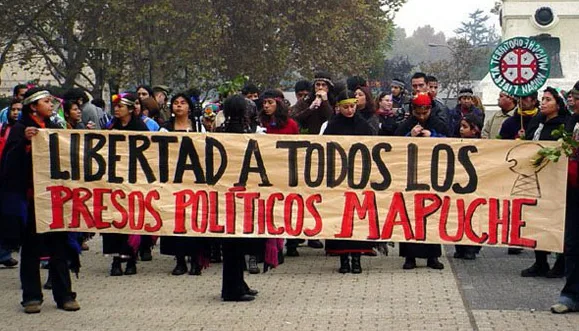
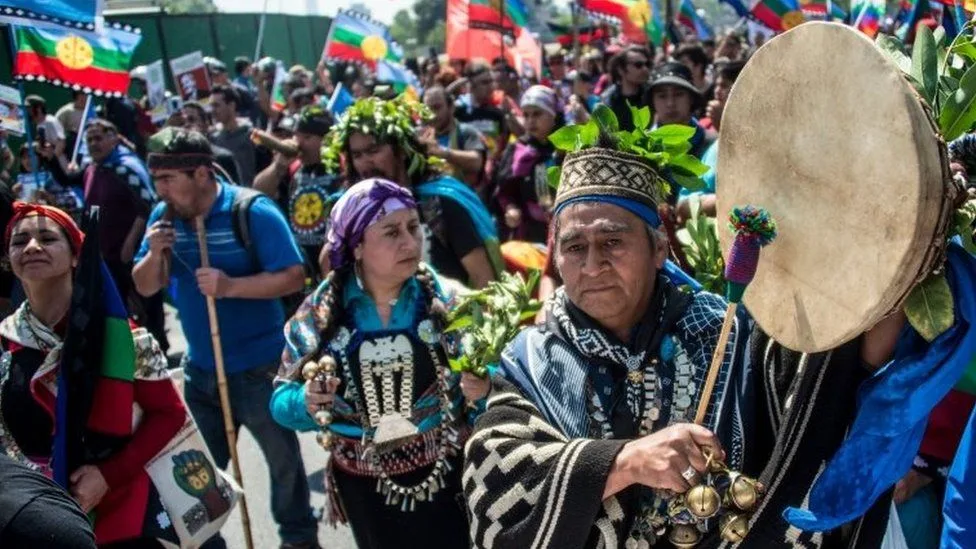
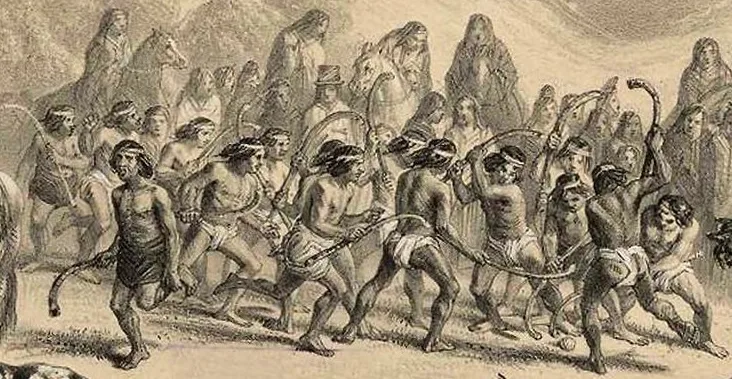
    Mapuches in their historical anti-colonial struggle. Images show, among other things, historical context, and playing Palin, the original field hockey!

    Notwithstanding this setback, ongoing calls for greater recognition of Indigenous rights, autonomy, and land restitution continue unabated and the Mapuche resistance maintains its historical strength. The Mapuche continue to advocate for the return of their ancestral territories and the recognition of their autonomy within the Chilean state.

  • José Larralde

    Maya Riviera Condos

    Herencia pa’ un Hijo Gaucho

    Jose larralde

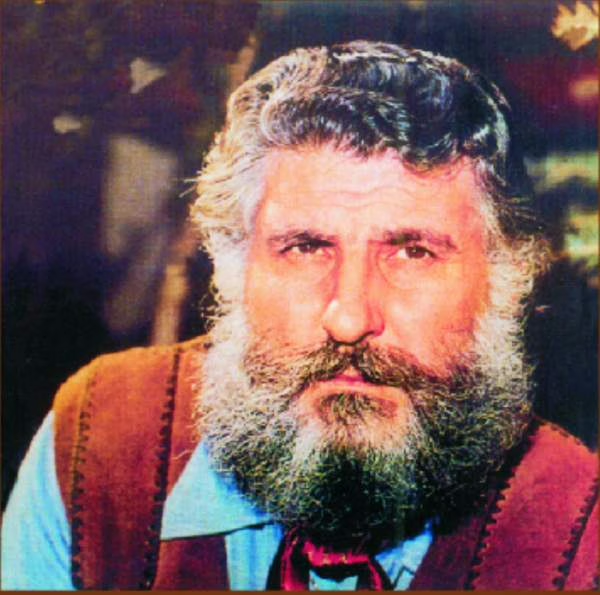
    José Larralde, one of Argentina’s most respected folk singers and poets, is often described as a payador in the purest sense of the word. His songs are deeply rooted in the traditions of the Argentine pampa. They stand as testimonies of rural life, social struggle, and cultural identity. Among his most evocative compositions is “Herencia pa’ un hijo gaucho” (“Inheritance for a Gaucho Son”). This piece distills his worldview and offers insight into his broader artistic project. Through this work, Larralde not only reaffirms his commitment to gaucho traditions but also articulates the challenges, dignity, and values of rural Argentina.

    Herencia pa’ un hijo gaucho — Selected Translation

    (Opening testament)

    “Son, I don’t leave you riches,
    not even a roof or a bit of land.
    My inheritance is poor,
    but it’s honest, and it’s yours.”

    (On dignity and poverty)

    “Don’t bow your head for being poor,
    because poverty isn’t shameful.
    Shame is in being a coward,
    or forgetting who you are.”

    (Advice on work and honesty)

    “Always earn your bread with your hands,
    even if it’s little, even if it’s hard.
    Better to live from your sweat
    than from another man’s gift.”

    (On justice and respect)

    “Be fair, even with the rich,
    but don’t let yourself be stepped on.
    Respect others, son,
    and demand they respect you.”

    (Closing legacy)

    “This is the inheritance I leave you:
    my word, my blood, my example.
    I have no gold to hand down—
    only the truth of being a gaucho.”

    The Gaucho as Symbol and Reality

    In Argentine cultural history, the gaucho has long been a central figure—half-mythic, half-real—embodying independence, resilience, and connection to the land. From the epic poem Martín Fierro by José Hernández to the music of Atahualpa Yupanqui, the gaucho has served as a metaphor for the nation’s soul and its struggles against injustice. Larralde situates himself firmly within this lineage. Unlike romanticized portrayals of gauchos as carefree wanderers, his work emphasizes the social conditions, poverty, and injustices endured by rural workers. He speaks not from a folkloric distance but from lived experience. Larralde himself laboured in rural trades before turning fully to music.

    “Herencia pa’ un hijo gaucho”: More Than a Legacy

    In “Herencia pa’ un hijo gaucho,” Larralde presents a father’s testament to his son. However, the “inheritance” is not material wealth—it is values, dignity, and a moral code rooted in honesty and perseverance. He frames poverty not as a source of shame but as a condition that sharpens character. What the gaucho father leaves behind is not land or cattle. It is the wisdom of survival: humility before nature, solidarity with one’s peers, and resistance to exploitation.

    This inversion of inheritance—away from property and toward principles—challenges modern values of materialism. Crucially, it places the weight of cultural transmission not on possessions but on ethos. For Larralde, the true legacy of the gaucho is a worldview forged in hardship. This legacy can sustain a son even when economic inheritance fails.

    The Social and Political Undercurrents

    Larralde’s work, though often couched in the intimate tones of fatherly advice or poetic reflection, is never far from social critique. His songs expose the precarious lives of rural workers. They address their displacement by modernization and the erosion of communal traditions. In this sense, “Herencia pa’ un hijo gaucho” is not only a personal song. It is also a collective lament. The song serves as a call to preserve cultural dignity amid social inequality.

    Unlike more commercialized strands of folk music, Larralde resisted mainstream industry pressures. He seldom granted interviews, avoided self-promotion, and preferred to let his music speak for itself. This integrity resonates with the very values he espouses in his song: authenticity, humility, and loyalty to one’s roots.

    Continuity with Folk Tradition

    Larralde’s artistry cannot be separated from the broader Argentine folk tradition. Like Atahualpa Yupanqui, he saw music as an instrument of testimony and resistance. Yet, his style is starker, less adorned, and more direct. He often relies on his voice and guitar alone. This simplicity gives his work a raw power. It provides an oral inheritance that mirrors the very content of “Herencia pa’ un hijo gaucho.” The sparse musical backdrop ensures that the weight of the words falls squarely on the listener. It evokes the atmosphere of the payada. In this way, meaning is carried more by word than by melody.

    Conclusion

    “Herencia pa’ un hijo gaucho” is both a song and a philosophy of life. In it, José Larralde redefines inheritance as the transmission of values, not possessions. He asserts the dignity of those who, though poor, carry within themselves the wisdom of endurance and honesty. His broader body of work continues this project: giving voice to the voiceless, preserving the cultural memory of the gaucho, and critiquing the injustices that threaten rural communities. In doing so, Larralde affirms that the true wealth of Argentina’s countryside is not its cattle or land, but the human spirit forged under its vast skies.

  • The Role of Folk Songs in Latin America

    Introduction

    In Latin America, folk songs have been more than just cultural artifacts or entertainment. They have acted as powerful instruments of resistance, identity, and social change. Rooted in Indigenous, African, and mestizo traditions, these songs have carried the voices of marginalized peoples across generations. During oppression, folk songs become protest anthems; in times of reform and revolution, they served as unifying cries for justice. To understand the trajectory of Latin American social struggles, one must listen closely to its folk music.


    Folk Songs as the Voice of the People

    Folk music in Latin America has long given voice to communities excluded from mainstream political discourse. Music was the vehicle through which farmers, miners, Indigenous groups, and workers, who lacked access to mass media or political platforms, spoke of their stories. Ballads, corridos, and cantos populares narrated local histories, injustices, and everyday experiences. Folk songs preserved oral traditions while giving visibility to collective suffering and resilience. In this way, folk music functioned as a “people’s newspaper,” spreading awareness and preserving cultural memory.

    Bolivia’s Savia Andina, highlighting the struggles of miners in the country

    Resistance in Times of Oppression

    During the 20th century, especially under authoritarian regimes, folk songs became a lifeline of resistance.

    The great Mercedes Sosa, The Voice of Latin America, singing an antiwar song with Leon Gieco.
    1. Chile: Under Augusto Pinochet’s dictatorship, the Nueva Canción Chilena movement was brutally repressed, with the assassination of Víctor Jara symbolizing the risks of artistic dissent. This is why songs, such as Te Recuerdo Amanda, became enduring emblems of resistance.
    2. Argentina: During the military junta of 1976–1983, singers like Mercedes Sosa risked censorship and exile for performing songs that denounced injustice. Her rendition of Sólo le pido a Dios became a transnational anthem for human rights.
    3. Brazil: Folk and popular musicians like Chico Buarque wove critiques of military rule into allegorical lyrics, resisting censorship while galvanizing opposition.

    In all these cases, songs communicated forbidden truths and kept alive the hope of liberation.


    Identity, Culture, and Solidarity

    Folk music has always been deeply tied to questions of identity. Latin American folk music reflects the continent’s diverse cultural heritage by blending Indigenous instruments like the quena, charango, and bombo legüero with African and European rhythms. By affirming cultural roots, these songs fostered pride in local traditions and strengthened solidarity across diverse groups.

    Shared singing at rallies, union meetings, and marches created collective identity. The act of singing together transformed individuals into communities of struggle, reinforcing belonging and determination in the face of adversity.


    Mobilization and Protest

    The accessibility of folk songs made them ideal tools for mobilization. Their simple structures and memorable lyrics allowed communities to quickly learn and transmit them. Protest movements across Latin America—from peasant land reform campaigns to student uprisings—used folk songs as rallying cries.

    In Mexico, corridos told of revolutionary heroes like Emiliano Zapata and Pancho Villa, inspiring generations of activists. In Central America, folk music carried messages of solidarity, such as in El Salvador and Nicaragua, where songs reinforced the legitimacy of popular resistance.

    Nuestro Mexico, Febrero 23, song of Mexican victory — Antonio Aguilar

    The Nueva Canción Movement

    Perhaps the most iconic intersection of folk music and social struggle came with the Nueva Canción (New Song) movement of the 1960s and 1970s. Emerging simultaneously in Chile, Argentina, and other parts of Latin America, Nueva Canción fused traditional folk with explicitly political lyrics. Artists like Violeta Parra, Víctor Jara, Inti-Illimani, Quilapayún, and Mercedes Sosa created music that denounced imperialism, supported workers’ rights, and advocated for socialist ideals.

    Nueva Canción was not merely a musical genre but a cultural-political movement. It challenged the dominance of commercialized popular music, promoted grassroots traditions, and aligned itself with broader social struggles, from Indigenous rights to anti-colonial movements across the Global South.


    The great Horacio “Pueblo” Guarany. “Estamos Prisioneros Carcelero”

    Reclaiming History

    Folk songs also function as repositories of memory. They preserve languages, myths, and historical experiences that might otherwise be silenced. In Indigenous communities, music links past and present, anchoring struggles for cultural survival in deeply rooted traditions.

    By invoking ancestral instruments, melodies, and rituals, Latin American folk songs resist cultural erasure and colonial assimilation.Even after dictatorships fell, these songs continued to serve as reminders of sacrifice, resilience, and unfinished struggles. They are living archives that remind societies of their wounds and their capacity for healing.

    Denunciation

    The beautiful song by Horacio Guarany shows the resistance to a military regime during the “Guerra Sucia (Dirty War)” en Argentina during the military dictatorship of General Videla. Guarany, as other notable Argentinian artists were given 48 hours to abandon their country. As Guarany reminds us “Si se calla al cantor calla la vida, porque la vida misma es todo un canto”“If the singer is silenced, life itself is silenced because life is all a song.”

    We are prisoners,
    jailer.
    I of these clumsy bars,
    You from fear!
    for Where are you going, what are you not coming to? with me to push the door, there is no bell tower that rings Bis:
    like the river out there.
    for Like one who catches fire, the prisoners of fear walk,
    it’s no use running,

    Bis:
    if the fire goes with them.
    for I dont know. I don’t remember well what did the jailer want,


    I think a song of mine Bis:
    to endure the silence.
    for There is no one who buys him luck,
    to the owner of the padlocks,
    died with one eye open Bis:
    and nobody could close it.
    for I gave him a dove to the jailer’s son;
    they say he let her go just to see the flight.

    Bis:
    How beautiful the world is going to be of the jailer’s son!
    for It is true, many were silent
    when I was arrested,
    go with the difference,
    Bis:
    I imprison, they subjected.


    Global Resonance and Solidarity

    Latin American folk songs have transcended regional boundaries, resonating with global struggles for justice. During the 1960s–1980s, translations and performances spread songs of Nueva Canción to Europe, Africa, and North America. Artists like Joan Baez and Pete Seeger performed Latin American protest songs, linking them to civil rights, antiwar, and anti-apartheid movements.

    This international circulation not only raised awareness of Latin America’s struggles but also reinforced a sense of global solidarity among movements fighting imperialism, racism, and inequality.

    Joan Baez, The Night They Drove Old Dixie Down (1971)

    Conclusion

    Folk songs in Latin America are more than cultural heritage—they are instruments of struggle, identity, and hope. From corridos of the Mexican Revolution to the haunting ballads of Nueva Canción, these songs have united voices against dictatorship, inspired solidarity among the oppressed, and preserved the cultural memory of entire nations. They remind us that music is not neutral: it can challenge power, strengthen communities, and illuminate paths toward justice.

    As long as social struggles persist in Latin America, folk songs will continue to echo in plazas, marches, and gatherings—carrying the heartbeat of resistance across generations.

Maya Riviera Condosx
Chatbot