
Inti-Illimani: The Eternal Voice of Chilean Memory and Resistance
When we talk about music that transcends borders and generations, Inti-Illimani always comes to mind. More than just a musical group, they represent a cultural and political movement. This movement is rooted in the dreams, struggles, and resilience of Latin America.
Founded in 1967 by university students in Santiago, Chile, Inti-Illimani became one of the leading voices of the Nueva Canción Chilena (New Chilean Song) movement. This artistic wave sought to recover and modernize traditional Andean music. It blended indigenous instruments and melodies with lyrics about justice, love, and social change. With instruments like the charango, quena, zampoña, and guitar, Inti-Illimani created a sound unmistakably their own. It was simultaneously rooted in the past and reaching toward a better future.
Their name carries symbolic weight: “Inti” means sun in Quechua, while “Illimani” is the name of a snow-capped mountain in Bolivia’s Andes. Together, the words evoke the timeless bond between nature, culture, and human dignity.
But history gave Inti-Illimani a role far larger than music. On September 11, 1973 (on what has been termed The First 9/11) while the band was on tour in Europe, Chile suffered the military coup that toppled the democratically elected President Salvador Allende. Unable to return to their homeland under Augusto Pinochet’s dictatorship, Inti-Illimani lived in exile in Italy for more than 15 years. Instead of silencing their voices, this forced displacement amplified them. Their concerts became gatherings of solidarity. Their albums served as a reminder to the world of Chile’s suffering and hope. They transformed grief into harmony, exile into connection.
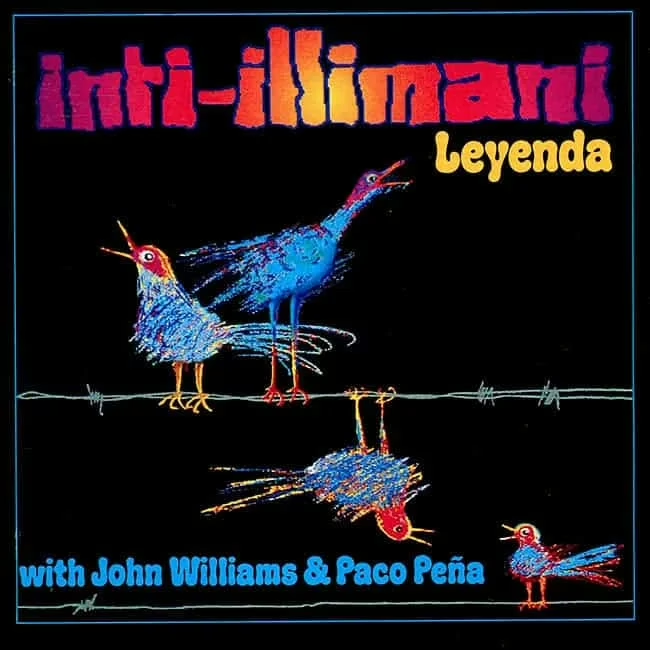
Over the decades, Inti-Illimani’s discography has woven together songs of resistance, folklore, and poetry. Classics like El pueblo unido jamás será vencido became anthems of global protest. They were sung far beyond Chile’s borders. Their music inspired not only Latin American movements but also international audiences. These audiences recognized in their songs a universal longing for freedom.
Today, the legacy of Inti-Illimani remains vibrant. Despite lineup changes and the passing of years, the group continues to perform. They adapt to new times while staying true to their essence. Their music has become part of the collective memory of Chile and the broader Latin American diaspora. It stands as a living testimony that art can endure dictatorship, exile, and generations of change.
At its heart, Inti-Illimani is not only about music—it is about identity, struggle, and the ability of song to heal and unite. They remind us that every note can carry a story. Additionally, every story can echo across mountains, borders, and time itself.
Maya Riviera Condos