Tag: activist

  • Mapuches

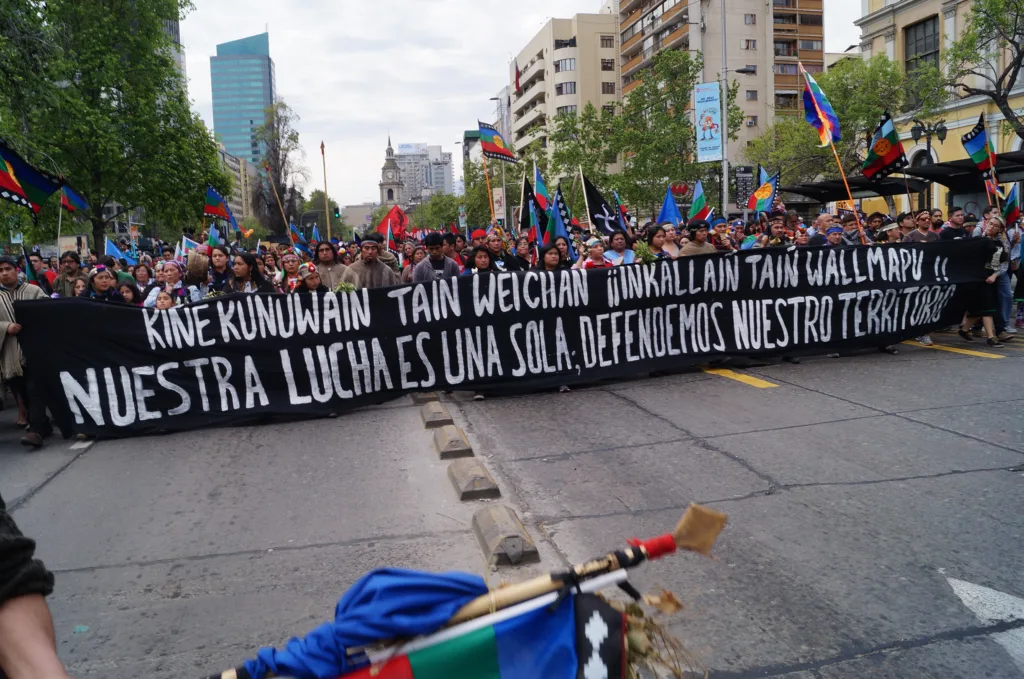
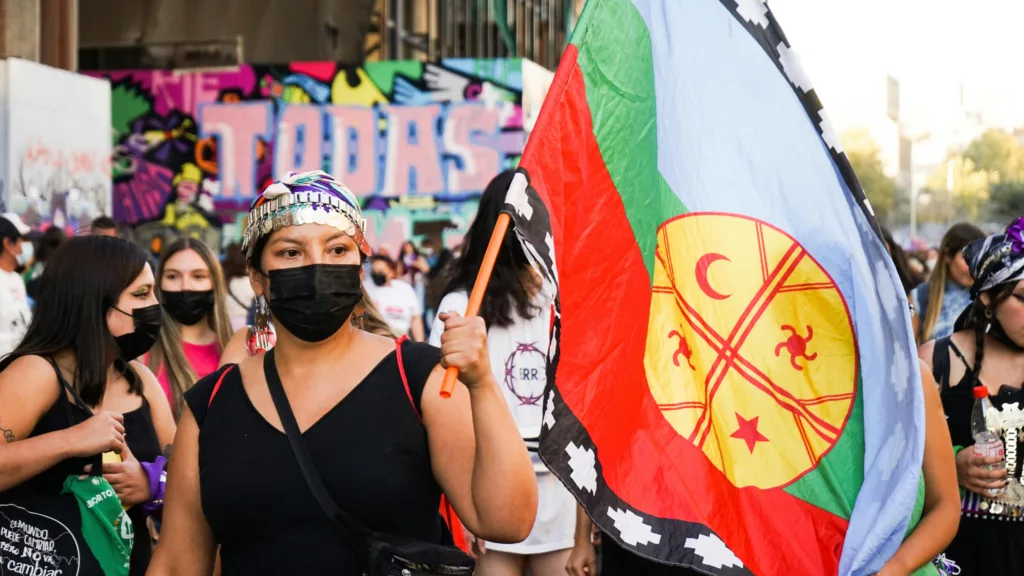
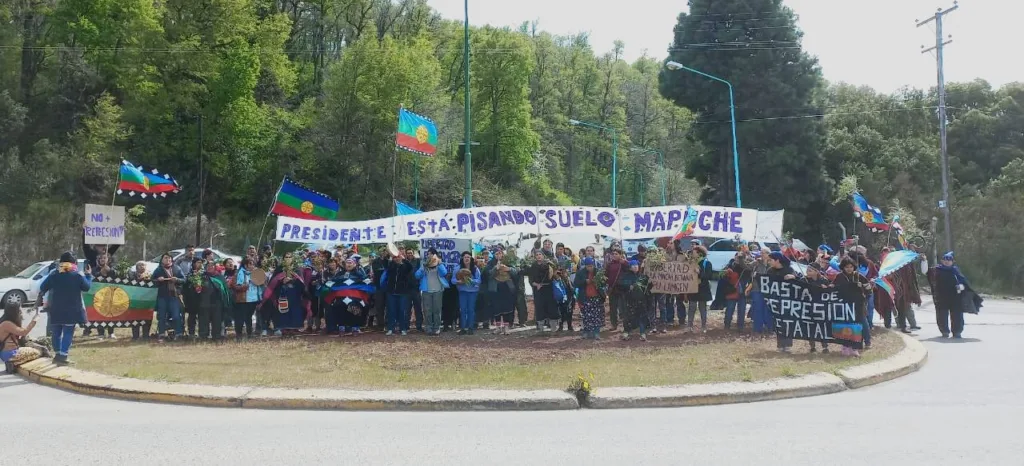
    Demo Presidente (laizquierdadiario.cl)

    Mapuches (meaning Mapu-Land, and Che-people) are indigenous to South America, sharing areas of southern Chile and Argentina–Mapuche territory stretches from the central region to the south of Chile, covering parts of the Araucanía and Los Ríos regions. At closed to 1.8 million people, Mapuches are the largest Indigenous population in the Americas.

    Historically known as Araucanos, Mapuches are one of three nations that cohabited the same region—the other two are Pihuelche and Huilliche.

    Social Structure

    The Mapuche social structure is both flexible and hierarchical, emphasizing kinship, community responsibility, and leadership. The Lof or Cavi (extended family group) is central to the Mapuche social structure. Each lof is typically composed of multiple families linked by blood, marriage, or adoption, who share communal land and responsibilities. The lof functions as an economic and social entity. Within the lof, Machis (traditional healers and religious leaders) hold significant authority, guiding decision-making and resolving disputes.

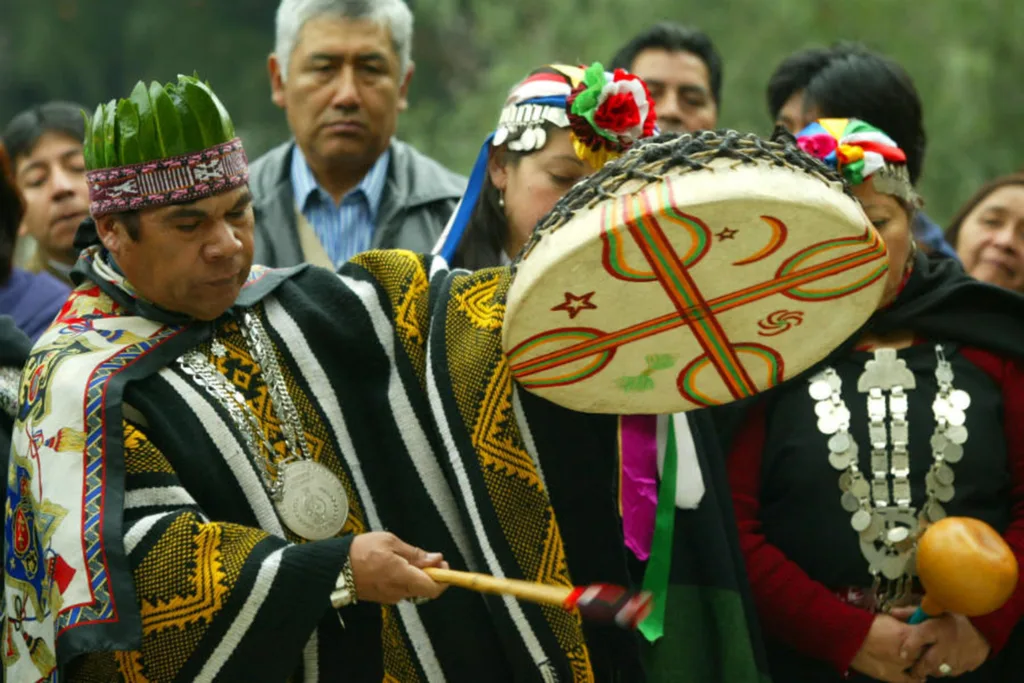
    The lof is also the building block of larger social formations. Multiple lof units form a rehue, a territorial and ritual grouping that binds several families together through shared spiritual practices, particularly those associated with the Nguillatun–the most important ceremony that invokes fertility, health, and balance. These ceremonies reinforce the Mapuche Cosmo-vision of social bonds and collective responsibility, reflecting the principle that individual well-being is intrinsic to communal welfare.
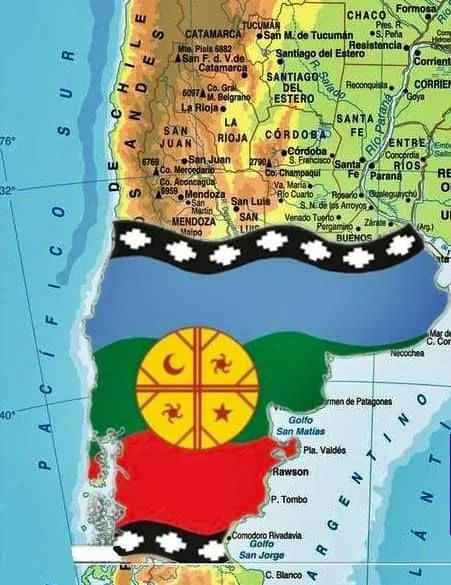
    Mapuland (amity tours)
    Map courtesy of Amity-Tours

    Leadership and Authority

    Leadership is based on wisdom, experience, and proven capability rather than rigid hierarchy. At the lof level, the lonko (chief) serves as the primary authority figure. The lonko is often an elder who represents the family group in negotiations, resolves conflicts, and ensures that traditions and customs are upheld. Selection of a lonko is typically consensual, relying on recognition of leadership qualities rather than inheritance alone.

    In larger societal scales, lonkos form a council to make decisions affecting multiple lofs, particularly during times of crisis or war. This structure allowed the Mapuche to resists the Inca and later Spanish colonial forces. The council seamless demonstrates the intrinsic dynamics between social cohesion and political organization. Notwithstanding this coordinated leadership, Mapuche society remained decentralized, valuing autonomy and local decision-making.

    The Mapuche and the Spanish Colonization

    Mapuches have a long history of resistance to external forces. They successfully resisted the Spanish colonization, maintaining their independence during the colonial period. The Arauco War (1536–1818), a prolonged military conflict between the Mapuche and the Spanish, was one the longest resistance movement in the Americas. Among the most notable feats of this war is the great rebellion of 1598–1602, which ended with the temporary expulsion of the Spaniards from certain Mapuche regions. Despite the military superiority of the conquerors, the Mapuche resistance stood out for its bravery and organization, which slowed the Spanish advance in the territory.

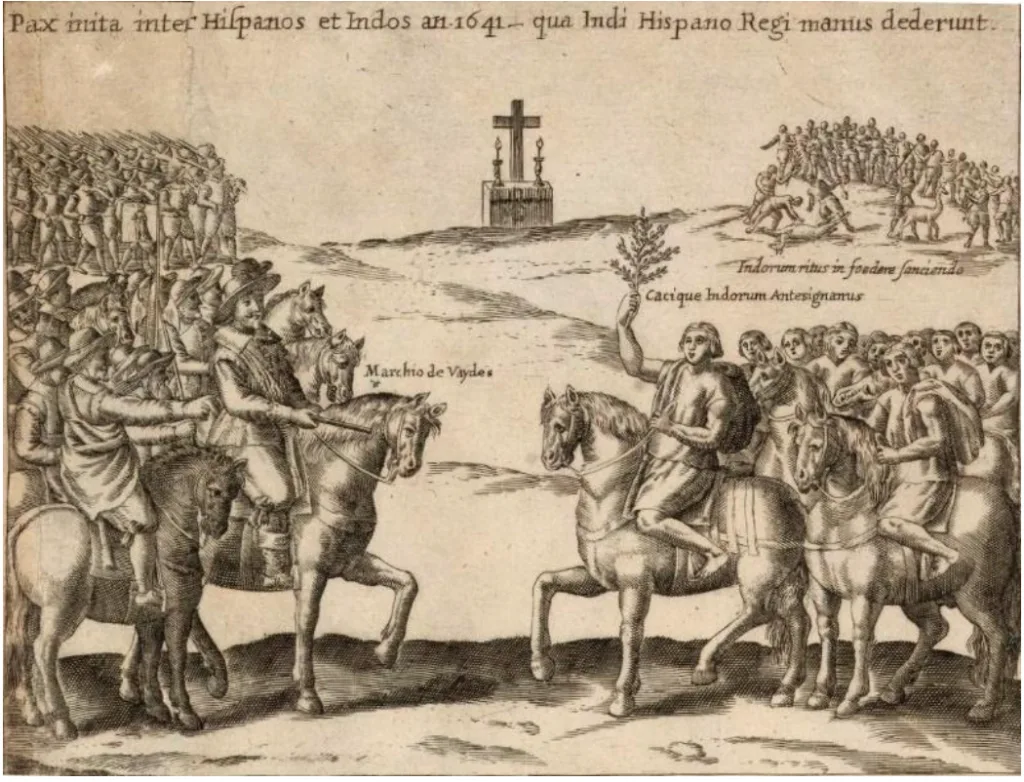
    Treaty of Quillén (1641)

    In 1641, the Spanish Crown recognized Mapuche territorial rights through the Treaty of Quillén, marking a ceasefire and a diplomatic agreement between the Conquistadores and the Mapuches in southern Chile. The treaty, however, was limited in its application and was ultimately violated as the Spanish expansion continued. Notwithstanding, Mapuches were able to retain autonomy over a large portion of their ancestral lands, but the relationship between the Mapuche and the Spanish remained fraught with conflict.

    Key points in the Treaty of Quillén:

    • End of hostilities: Ending a long period of war between the Spanish and the Mapuche, bringing peace to the region.
    • Mapuche autonomy: Guaranteed the Mapuche a large degree of autonomy over their territories, recognizing their right to govern their lands according to their own laws and customs.
    • Respect for cultures: Fostering mutual respect for the cultures, allowing both parties to co-exist while maintaining their distinct identities.
    • Diplomatic model: This treaty is often cited as an example of successful diplomacy, where dialogue and negotiation prevailed over military confrontation.

    Treaty of Tapihue (1825)

    Chilean independence was declared on September 18th, 1818, following the Spaniard defeat in the Battle of Maipú. The nascent Chilean government moved to consolidate its power and this led to a period of uncertainty between the Mapuche people and the emerging Chilean state.

    The Treaty of Tapihue, signed on January 7, 1825, marks a moment of peace and cooperation between the Chilean authorities and the Mapuche people. The treaty strengthened diplomatic relations and promoted peaceful co-existence after a period of conflict.

    Key points in the Treaty of Tapihue:

    • Mutual recognition: The treaty established mutual respect between the two parties, with official recognition of the territories and rights of the Mapuche.
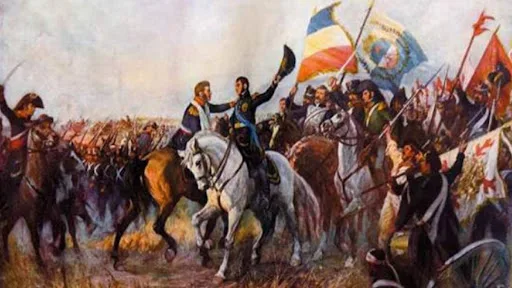
    El abrazo de Maipu
    The “Embrace of Maipú” between José de San Martín and Bernardo O’Higgins, after the victory in the Battle of Maipú
    • Peace and stability: By signing this treaty, both sides ended decades of conflict, thereby promoting peace and stability in the region.
    • Trade and commerce: The Treaty paved the way for trade and cultural exchanges, benefiting both communities and strengthening economic ties.

    These two treaties are central to the development of the Kingdom of Araucania and Patagonia and its Constitution, written by Orélie-Antoine I and the Mapuche Parliament. Differing from experiences like Canada, where treaties were reaffirmed by the Crown and were brought into common-law, the Mapuche experience with treaties and agreements is fraught with broken promises, failed negotiations, and continued resistance to this day.

    The Post-Colonial Period: The Chilean State and Mapuche Lands

    After Chile declared its independence from Spain in 1818, the new Chilean government sought to consolidate its control over the entire territory, including the Mapuche territories in the south of Chile. This process led to the Pacification of Araucanía (1851–1883), a genocidal military campaign in which the Chilean state forcibly took control of Mapuche lands. Mapuche people were subjected to violent repression, and their territories were gradually annexed by the Chilean state.

    During this colonizing period, the Mapuches lost significant portions of their ancestral lands, resulting in displacements and segregation to small plots of land. The Chilean government justified this land appropriation through a legal framework that ignored or dismissed Mapuche land rights. Many Mapuche communities, despite facing violence and dispossession, resisted (and continue to resist) the loss of their lands.

    The “Boundary Treaty” of 1881

    In 1881, during the Chilean consolidation of control over southern Chile, Chile and Argentina signed the Treaty of 1881 (November 12, 1881). The treaty was signed following a failed revolt by Mapuches, who sought securities for their land an culture. The agreement was controversial and not universally accepted and it failed to protect the Mapuche people’s ancestral lands in the long term.

    In Chile, the Treaty of 1881 essentially formalized the loss of Mapuche territory under the auspices of Chile’s sovereignty. It divided Mapuche lands into parcels and sought to integrate the Mapuche population into the Chilean economy, but in practice, it led to a reduction in the size of their territory. The Mapuche viewed it as a dismantling of their sovereignty and many Mapuche leaders never accepted the terms of the treaty.

    Modern Day: Land Conflicts and Mapuche Autonomy

    In the modern context, the issue of the Mapuche and their lands remains one of the most contentious topics in Chilean politics. Following the end of the military dictatorship of Augusto Pinochet (1973–1990), the Chilean government recognized the importance of addressing Indigenous rights, but the solutions offered have often been inadequate or ignored by both the state and the private sector.

    The Post-Pinochet Legal Framework: One of the main pieces of legislation that addresses the rights of Indigenous peoples in Chile is the Indigenous Law No. 19,253 (1993), which recognizes the rights of Indigenous people to their ancestral lands and grants them some degree of cultural and political autonomy. However, critics argue that the law has been insufficient in addressing the underlying issues of land restitution and full autonomy.

    The Land Conflict and the Role of the State

    Return of land, or Wallmapu, remains central to the ongoing Mapuche resistance. Land once held by the Mapuche has been appropriated for logging, agricultural, and mining projects, with little regard for the rights of the Indigenous people, and notwithstanding the Chilean ratification of the United Nations Declaration on the Rights of Indigenous Peoples (UNDRIP). Much of this land is now owned by large private corporations or the Chilean state.

    Mapuche people rightly argue that the Chilean state has failed to honour past agreements and promises to return their ancestral lands. They view this failure as a breach of trust and ongoing colonization. Mapuches experience high levels of poverty and marginalization and they argue that this a direct consequence of the state’s policies of land appropriation and economic exploitation.

    The Role of the Mapuche Autonomous Movement

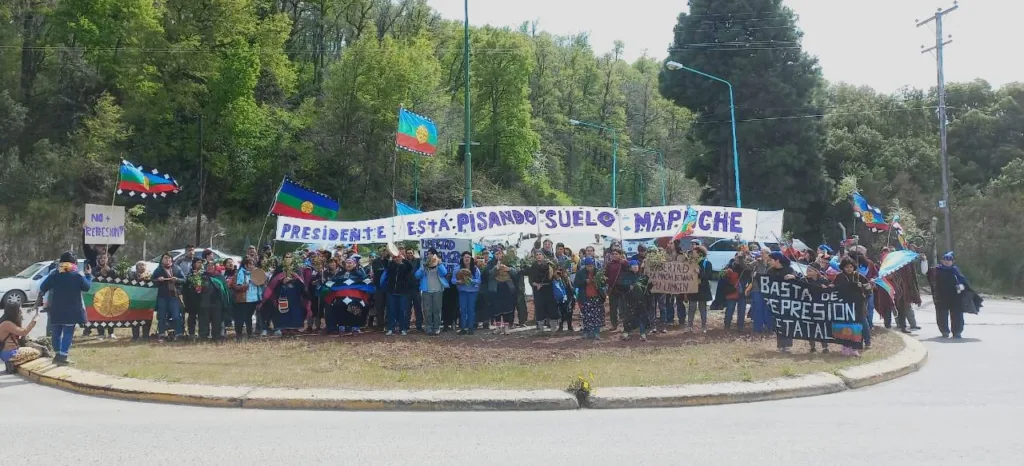
    The Mapuche Autonomous Movement (or Mapuche Resistance) has become a central force in demanding self-determination, the return of lands, and the recognition of Mapuche culture and language. The movement advocates for the creation of an autonomous Mapuche territory and for recognition of the Mapuche people’s right to govern their own lands.

    The movement has used various tactics, from peaceful protests to more confrontational actions like land occupations, road blockades, and attacks on logging and agricultural industries that are seen as exploiting Mapuche land. These tactics have led to tensions with the Chilean government, which has at times responded with military force and heavy policing.
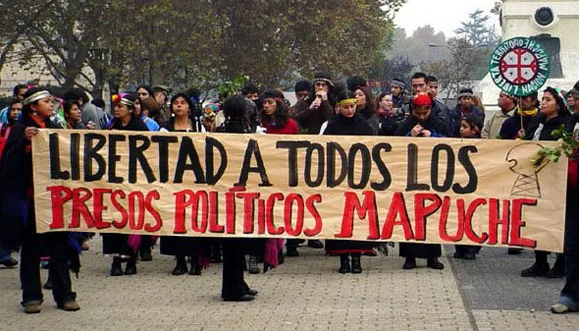
    Libertad para presos politicos

    Recent Developments: The 2020 Constitutional Process and the Mapuche

    In 2020, Chile embarked on a constitutional reform process, which was sparked by widespread protests against inequality, corruption, and neoliberal economic policies first implemented under the Pinochet dictatorship. Indigenous rights were an important aspect of the country-wide protests.

    In 2021, a significant step forward was made when a Mapuche woman, Elisa Loncón, was elected president of the Constituent Assembly, which is tasked with drafting the new constitution. This was a historic moment for the Mapuche people, as they were given a direct voice in the national constitutional process. Sadly, following an intensive campaign of fear and misinformation by the Chilean state, the media, and financial interests, the proposed constitution was defeated in a plebiscite.
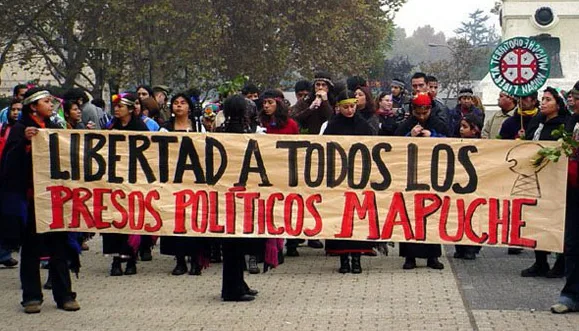
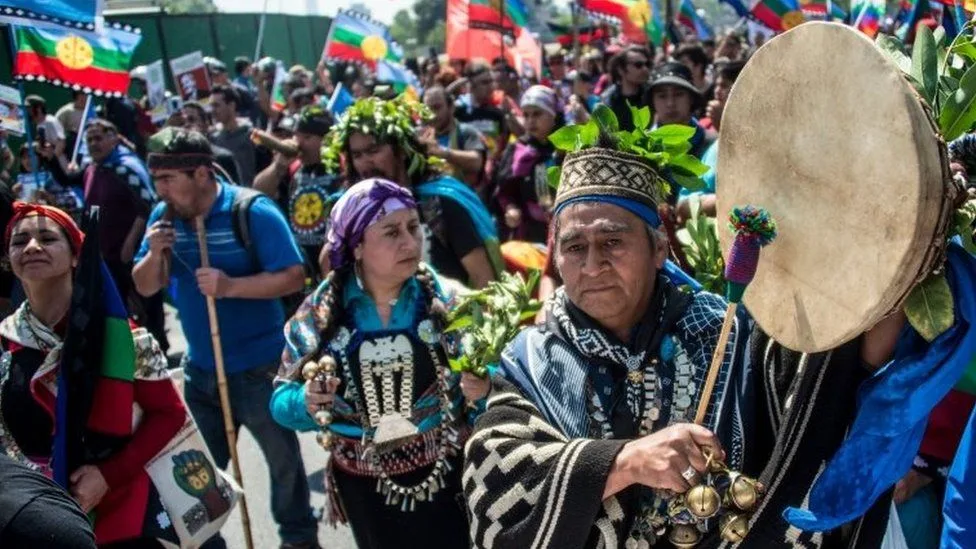
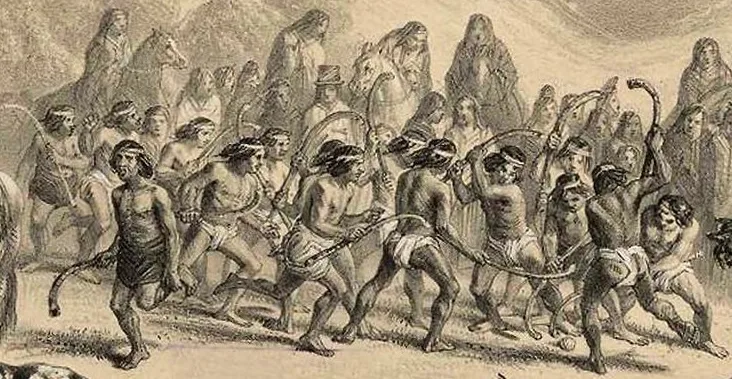
    Mapuches in their historical anti-colonial struggle. Images show, among other things, historical context, and playing Palin, the original field hockey!

    Notwithstanding this setback, ongoing calls for greater recognition of Indigenous rights, autonomy, and land restitution continue unabated and the Mapuche resistance maintains its historical strength. The Mapuche continue to advocate for the return of their ancestral territories and the recognition of their autonomy within the Chilean state.
  • Pablo Neruda

    The Poet at the Forefront of Social Activism

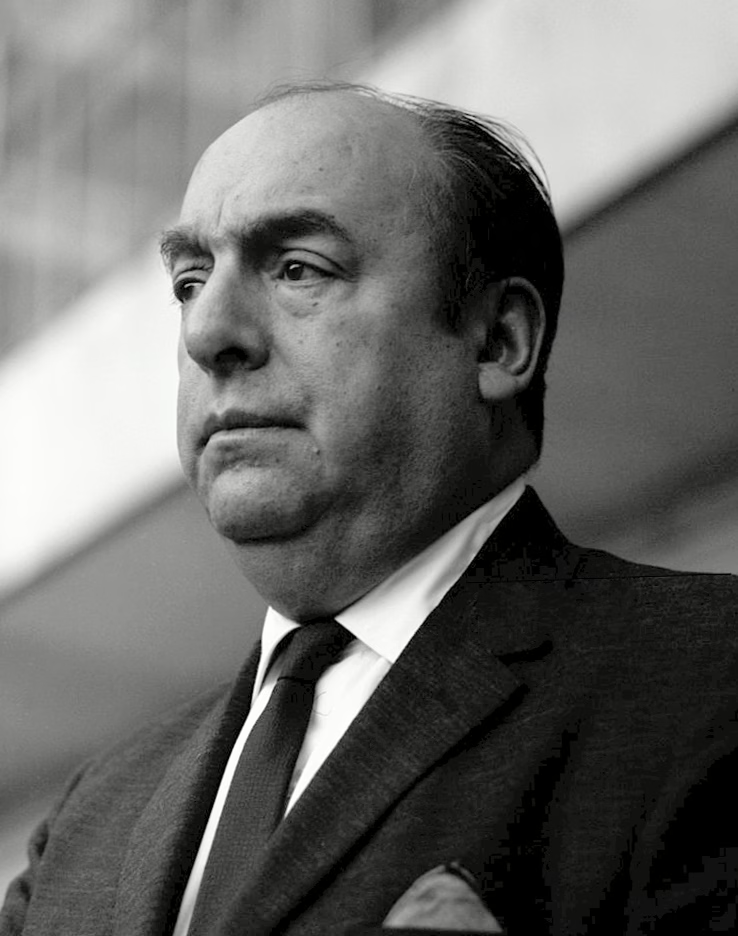
    Pablo neruda 1963

    Pablo Neruda, born in 1904 in Chile, evolved from a literary figure into a significant political activist. Following treatment for prostate cancer and an assassination attempt by a Pinochet operative, who injected Neruda with an unknown substance, in the evening of 23 September 1973, at Santiago’s Santa María Clinic, Neruda died of heart failure.

    ​His political legacy intertwines with his literary work, notably in his epic poem Canto General, which reflects historical and social themes rooted in his ideology. Neruda’s political career underscores his belief in poetry’s power as a tool for social change and represents a significant chapter in 20th-century Latin American political history.

    One of the most influential poets of the 20th century, Neruda wrote with a voice that resonates across borders and time. Known for his deeply emotional and sensual poems, Neruda’s work transcends the personal to address the political, the universal, and the timeless. Whether exploring themes of love, longing, despair, or social justice, his poetry offers a profound glimpse into the human experience.

    The Voice of the People

    What makes Neruda’s poetry so universally relatable is his ability to voice the struggles and joys of ordinary people. From the factory worker to the farmer, from the lover to the revolutionary, Neruda’s characters feel alive with purpose.Neruda’s ability to capture the pulse of society—and the nuances of human existence—sets him apart as a poet of the people. His use of simple, direct language also allows him to create an immediate emotional connection with his readers.

    The poem, “Ode to My Socks”, illustrates this perfectly. In what seems like a simple ode to an everyday object, Neruda elevates the mundane to the sublime, transforming an ordinary moment into a meditation on beauty, love, and human connection. The poem’s simplicity is its power, reminding us that even in the smallest of things, there’s room for wonder and celebration.

    Neruda’s Enduring Influence

    What makes Neruda’s poetry timeless is its ability to speak to the heart of human experience. His works continue to resonate with readers around the world, regardless of their cultural background. Neruda’s distinct voice, one that intertwines sensuality, politics, and universal themes of love and loss, remains a beacon for contemporary poets and readers alike.

    Whether it’s the passionate embrace of romantic love or the bitter struggle for justice, Pablo Neruda’s poetry invites us into a world where emotion is not just felt but lived. His words continue to stir hearts and provoke thought, solidifying his place as one of the most beloved poets in modern history. In Neruda’s poetry, we find not just words on a page, but a window into the soul of humanity—a place where beauty, struggle, and emotion converge in a powerful and enduring symphony.

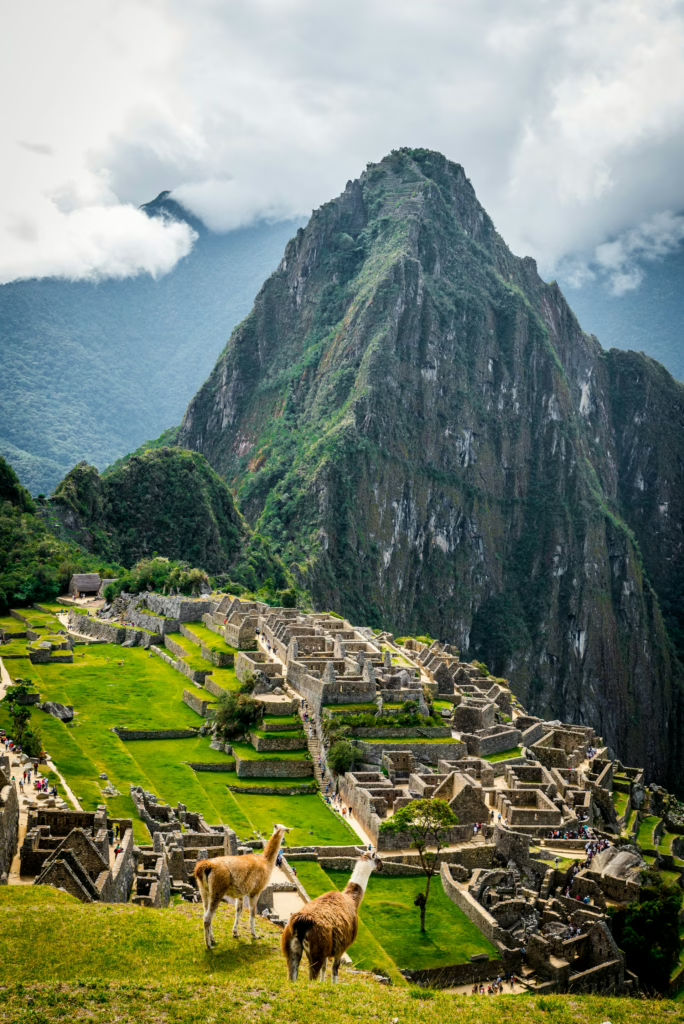
    Pablo Neruda is renowned for his vivid imagery and profound ability to capture the soul of a place. Among his many masterpieces, his poem Machu Picchu Heights stands out as a monumental reflection on the intersection of history, nature, and human existence. Written during his journey to the iconic Incan citadel, Neruda’s words offer a stunning meditation on the ruins and the people who once inhabited them.

    In “Machu Picchu Heights,” Neruda channels the awe he felt while standing at the pinnacle of the ancient ruins, observing the breathtaking landscape that stretches out beneath him. The poem is a fusion of the poet’s admiration for the natural world and his recognition of human history, particularly the legacy of the Inca civilization. The poem delves deep into the spiritual connection between people and place, juxtaposing the grandeur of the site with the solitude it now endures.

    “Alturas de Machu Picchu”, is a poetic tribute to the ancient Inca city of Machu Picchu in Peru. This poem is part of his larger work Canto General and reflects Neruda’s contemplation on history, humanity, and permanence. “Alturas de Machu Picchu” explores the juxtaposition of life and death, permanence and impermanence. Neruda identifies with the builders of Machu Picchu, celebrating their legacy and existence through the enduring stones of the city despite their physical deaths. The poem invokes the spirit of the ancient inhabitants and their gods, merging them metaphorically with the natural landscape, rivers, and mountains of the region.

    Neruda uses vivid metaphors comparing Machu Picchu to hurricanes, cataracts, and flora to emphasize the city’s grandeur and eternal nature. The poem is both a personal journey of self-discovery and a universal meditation on the resilience of human spirit embodied in the ancient ruins. It honors the craftsmanship and memory of the Incas, suggesting their essence lives on through the monument they left behind.

    ​Overall, “Alturas de Machu Picchu” reflects Neruda’s deep political, historical, and humanistic concerns, blending his poetic mastery with a profound respect for the past and an urgent call to recognize the continuity between history and the present.

    ​This poem stands as a vital piece of Neruda’s oeuvre, symbolizing his belief in poetry as a means of immortalizing human achievement and connecting with those who came before us.

    Neruda’s poetic vision intertwines the ruins of Machu Picchu with the broader struggles of history. For him, the ancient stones of the Incan city are not just architectural marvels; they are witnesses to a past filled with both grandeur and tragedy. The poem explores how time, nature, and humanity have coexisted—how the Incan people, once so powerful, now live only in memory, their civilization overrun by foreign conquerors.

    Cynthia winward 8glhfip6ekw unsplash

    Themes of Time and Memory

    Neruda’s exploration of Machu Picchu is imbued with themes of loss and memory. The majestic ruins, once a thriving center of life, now stand as a haunting reminder of what was lost to time. But Neruda also celebrates the endurance of these stones, which have withstood centuries of change and destruction. They are symbolic not only of a bygone civilization but of the resilience of the human spirit and the lasting impact of culture and history.

    Through “Machu Picchu Heights,” Neruda urges us to reflect on the passage of time and the impermanence of human achievements. Yet, even in the face of this, he suggests that there is beauty in the ruins—beauty in remembering and honoring the past, no matter how distant or forgotten it may seem.

    Los Jaivas and their musical interpretation of “Alturas de Machu Picchu”. Introduction by the great Peruvian writer Mario Vargas Llosa.

    Neruda’s Personal Connection

    For Neruda, the visit to Machu Picchu was deeply personal. It was part of a larger journey of discovery in his lifelong quest to understand the landscapes and peoples that shaped his identity. The ruins of Machu Picchu, nestled in the Andean mountains, were a place where the poet could reflect on both the past and present, feeling the weight of history and the beauty of the surrounding world. His poetry, in this sense, becomes a bridge between the ancient and the modern, inviting readers to ponder the deep, timeless connections between humanity, nature, and the legacy of civilizations.

    Conclusion

    In “Machu Picchu Heights,” Neruda crafts a haunting and powerful homage to the ruins of one of the world’s most famous archaeological sites. Through his lyrical lines, he honors the Incas and reflects on the fleeting nature of human existence. But, like much of Neruda’s work, the poem also carries a message of endurance and resilience—a celebration of the past that continues to inform the present. In this way, Neruda’s visit to Machu Picchu is not just an exploration of a physical space, but an emotional and intellectual journey into the depths of history, memory, and the human soul.

    Alturas de Machu Picchu

    Del aire al aire, como una red vacía,
    iba yo entre las calles y la atmósfera, llegando y despidiendo,
    en el advenimiento del otoño la moneda extendida
    de las hojas, y entre la primavera y las espigas,
    lo que el más grande amor, como dentro de un guante
    que cae, nos entrega como una larga luna.

    (Días de fulgor vivo en la intemperie
    de los cuerpos: aceros convertidos
    al silencio del ácido:
    noches desdichadas hasta la última harina:
    estambres agredidos de la patria nupcial.)

    Alguien que me esperó entre los violines
    encontró un mundo como una torre enterrada
    hundiendo su espiral más abajo de todas
    las hojas de color de ronco azufre:
    más abajo, en el oro de la geología,
    como una espada envuelta en meteoros,
    hundí la mano turbulenta y dulce
    en lo más genital de lo terrestre.

    Puse la frente entre las olas profundas,
    descendí como gota entre la paz sulfúrica,
    y, como un ciego, regresé al jazmín
    de la gastada primavera humana.

    II

    Si la flor a la flor entrega el alto germen
    y la roca mantiene su flor diseminada
    en su golpeado traje de diamante y arena,
    el hombre arruga el pétalo de la luz que recoge
    en los determinados manantiales marinos
    y taladra el metal palpitante en sus manos.
    Y pronto, entre la ropa y el humo, sobre la mesa hundida,
    como una barajada cantidad, queda el alma:
    cuarzo y desvelo, lágrimas en el océano
    como estanques de frío: pero aún
    mátala y agonízala con papel y con odio,
    sumérgela en la alfombra cotidiana, desgárrala
    entre las vestiduras hostiles del alambre.

    No: por los corredores, aire, mar o caminos,
    quién guarda sin puñal (como las encarnadas
    amapolas) su sangre? La cólera ha extenuado
    la triste mercancía del vendedor de seres,
    y, mientras en la altura del ciruelo, el rocío
    desde mil años deja su carta transparente
    sobre la misma rama que lo espera, oh corazón, oh frente triturada
    entre las cavidades del otoño.
    Cuántas veces en las calles del invierno de una ciudad o en
    un autobús o un barco en el crepúsculo, o en la soledad
    más espesa, la de la noche de fiesta, bajo el sonido
    de sombras y campanas, en la misma gruta del placer humano,
    me quise detener a buscar la eterna veta insondable
    que antes toqué en la piedra o en el relámpago que el beso desprendía.

    (Lo que en el cereal como una historia amarilla
    de pequeños pechos preñados va repitiendo un número
    que sin cesar es ternura en las capas germinales,
    y que, idéntica siempre, se desgrana en marfil
    y lo que en el agua es patria transparente, campana
    desde la nieve aislada hasta las olas sangrientas.)

    No pude asir sino un racimo de rostros o de máscaras
    precipitadas, como anillos de oro vacío,
    como ropas dispersas hijas de un otoño rabioso
    que hiciera temblar el miserable árbol de las razas asustadas.

    No tuve sitio donde descansar la mano
    y que, corriente como agua de manantial encadenado,
    o firme como grumo de antracita o cristal,
    hubiera devuelto el calor o el frío de mi mano extendida.
    Qué era el hombre? En qué parte de su conversación abierta
    entre los almacenes de los silbidos, en cuál de sus movimientos metálicos
    vivía lo indestructible, lo imperecedero, la vida?

    III

    El ser como el maíz se desgranaba en el incansable
    granero de los hechos perdidos, de los acontecimientos
    miserables, del uno al siete, al ocho,
    y no una muerte, sino muchas muertes llegaba a cada uno:
    cada día una muerte pequeña, polvo, gusano, lámpara
    que se apaga en el lodo del suburbio, una pequeña muerte de alas gruesas
    entraba en cada hombre como una corta lanza
    y era el hombre asediado del pan o del cuchillo,
    el ganadero: el hijo de los puertos, o el capitán oscuro del arado,
    o el roedor de las calles espesas:

    todos desfallecieron esperando su muerte, su corta muerte diaria:
    y su quebranto aciago de cada día era
    como una copa negra que bebían temblando.

    IV

    La poderosa muerte me invitó muchas veces:
    era como la sal invisible en las olas,
    y lo que su invisible sabor diseminaba
    era como mitades de hundimientos y altura
    o vastas construcciones de viento y ventisquero.

    Yo al férreo vine, a la angostura
    del aire, a la mortaja de agricultura y piedra,
    al estelar vacío de los pasos finales
    y a la vertiginosa carretera espiral:
    pero, ancho mar, oh muerte!, de ola en ola no vienes,
    sino como un galope de claridad nocturna
    o como los totales números de la noche.

    Nunca llegaste a hurgar en el bolsillo, no era
    posible tu visita sin vestimenta roja:
    sin auroral alfombra de cercado silencio:
    sin altos enterrados patrimonios de lágrimas.

    No pude amar en cada ser un árbol
    con su pequeño otoño a cuestas (la muerte de mil hojas)
    todas las falsas muertes y las resurrecciones
    sin tierra, sin abismo:
    quise nadar en las más anchas vidas,
    en las más sueltas desembocaduras,
    y cuando poco a poco el hombre fue negándome
    y fue cerrando paso y puerta para que no tocaran
    mis manos manantiales su inexistencia herida,
    entonces fui por calle y calle y río y río,
    y ciudad y ciudad y cama y cama,
    y atravesó el desierto mi máscara salobre,
    y en las últimas casas humilladas, sin lámpara, sin fuego,
    sin pan, sin piedra, sin silencio, solo,
    rodé muriendo de mi propia muerte.

    V

    No eras tú, muerte grave, ave de plumas férreas,
    la que el pobre heredero de las habitaciones
    llevaba entre alimentos apresurados, bajo la piel vacía:
    era algo, un pobre pétalo de cuerda exterminada:
    un átomo del pecho que no vio al combate
    o el áspero rocío que no cayó en la frente.
    Era lo que no pudo renacer, un pedazo
    de la pequeña muerte sin paz ni territorio:
    un hueso, una campana que morían en él.
    Yo levanté las vendas del yodo, hundí las manos
    en los pobres dolores que mataban la muerte,
    y no encontré en la herida sino una racha fría
    que entraba por los vagos intersticios del alma.

    VI

    Entonces en la escala de la tierra he subido
    entre la atroz maraña de las selvas perdidas
    hasta ti, Macchu Picchu.
    Alta ciudad de piedras escalares,
    por fin morada del que lo terrestre
    no escondió en las dormidas vestiduras.
    En ti, como dos líneas paralelas,
    la cuna del relámpago y del hombre
    se mecían en un viento de espinas.

    Madre de piedra, espuma de los cóndores.

    Alto arrecife de la aurora humana.

    Pala perdida en la primera arena.

    Ésta fue la morada, éste es el sitio:
    aquí los anchos granos del maíz ascendieron
    y bajaron de nuevo como granizo rojo.

    Aquí la hebra dorada salió de la vicuña
    a vestir los amores, los túmulos, las madres,
    el rey, las oraciones, los guerreros.


    Aquí los pies del hombre descansaron de noche
    junto a los pies del águila, en las altas guaridas
    carniceras, y en la aurora
    pisaron con los pies del trueno la niebla enrarecida,
    y tocaron las tierras y las piedras
    hasta reconocerlas en la noche o la muerte.

    Miro las vestiduras y las manos,
    el vestigio del agua en la oquedad sonora,
    la pared suavizada por el tacto de un rostro
    que miró con mis ojos las lámparas terrestres,
    que aceitó con mis manos las desaparecidas
    maderas: porque todo, ropaje, piel, vasijas,
    palabras, vino, panes,
    se fue, cayó a la tierra.Y el aire entró con dedos
    de azahar sobre todos los dormidos:
    mil años de aire, meses, semanas de aire,
    de viento azul, de cordillera férrea,
    que fueron como suaves huracanes de pasos
    lustrando el solitario recinto de la piedra.VII

    Muertos de un solo abismo, sombras de una hondonada,
    la profunda, es así como al tamaño
    de vuestra magnitud
    vino la verdadera, la más abrasadora
    muerte y desde las rocas taladradas,
    desde los capiteles escarlata,
    desde los acueductos escalares
    os desplomasteis como en un otoño
    en una sola muerte.
    Hoy el aire vacío ya no llora,
    ya no conoce vuestros pies de arcilla,
    ya olvidó vuestros cántaros que filtraban el cielo
    cuando lo derramaban los cuchillos del rayo,
    y el árbol poderoso fue comido
    por la niebla, y cortado por la racha.

    Él sostuvo una mano que cayó de repente
    desde la altura hasta el final del tiempo.
    Ya no sois, manos de araña, débiles
    hebras, tela enmarañada:
    cuanto fuisteis cayó: costumbres, sílabas
    raídas, máscaras de luz deslumbradora.

    Pero una permanencia de piedra y de palabra:
    la ciudad como un vaso se levantó en las manos
    de todos, vivos, muertos, callados, sostenidos
    de tanta muerte, un muro, de tanta vida un golpe
    de pétalos de piedra: la rosa permanente, la morada:
    este arrecife andino de colonias glaciales.

    Cuando la mano de color de arcilla
    se convirtió en arcilla, y cuando los pequeños párpados se cerraron
    llenos de ásperos muros, poblados de castillos,
    y cuando todo el hombre se enredó en su agujero,
    quedó la exactitud enarbolada:
    el alto sitio de la aurora humana:
    la más alta vasija que contuvo el silencio:
    una vida de piedra después de tantas vidas.

    VIII

    Sube conmigo, amor americano.
    Besa conmigo las piedras secretas.
    La plata torrencial del Urubamba
    hace volar el polen a su copa amarilla.

    Vuela el vacío de la enredadera,
    la planta pétrea, la guirnalda dura
    sobre el silencio del cajón serrano.
    Ven, minúscula vida, entre las alas
    de la tierra, mientras -cristal y frío, aire golpeado -
    apartando esmeraldas combatidas,
    oh agua salvaje, bajas de la nieve.

    Amor, amor, hasta la noche abrupta,
    desde el sonoro pedernal andino,
    hacia la aurora de rodillas rojas,
    contempla el hijo ciego de la nieve.

    Oh, Wilkamayu de sonoros hilos,
    cuando rompes tus truenos lineales
    en blanca espuma, como herida nieve,
    cuando tu vendaval acantilado
    canta y castiga despertando al cielo,
    qué idioma traes a la oreja apenas
    desarraigada de tu espuma andina?

    Quién apresó el relámpago del frío
    y lo dejó en la altura encadenado,
    repartido en sus lágrimas glaciales,
    sacudido en sus rápidas espadas,
    golpeando sus estambres aguerridos,
    conducido en su cama de guerrero,
    sobresaltado en su final de roca?

    Qué dicen tus destellos acosados?
    Tu secreto relámpago rebelde
    antes viajó poblado de palabras?
    Quién va rompiendo sílabas heladas,
    idiomas negros, estandartes de oro,
    bocas profundas, gritos sometidos,
    en tus delgadas aguas arteriales?

    Quién va cortando párpados florales
    que vienen a mirar desde la tierra?
    Quién precipita los racimos muertos
    que bajan en tus manos de cascada
    a desgranar su noche desgranada
    en el carbón de la geología?

    Quién despeña la rama de los vínculos?
    Quién otra vez sepulta los adioses?

    Amor, amor, no toques la frontera,
    ni adores la cabeza sumergida:
    deja que el tiempo cumpla su estatura
    en su salón de manantiales rotos,
    y, entre el agua veloz y las murallas,
    recoge el aire del desfiladero,
    las paralelas láminas del viento,
    el canal ciego de las cordilleras,
    el áspero saludo del rocío,
    y sube, flor a flor, por la espesura,
    pisando la serpiente despeñada.

    En la escarpada zona, piedra y bosque,
    polvo de estrellas verdes, selva clara,
    Mantur estalla como un lago vivo
    o como un nuevo piso del silencio.

    Ven a mi propio ser, al alba mía,
    hasta las soledades coronadas.
    El reino muerto vive todavía.

    Y en el Reloj la sombra sanguinaria
    del cóndor cruza como una nave negra.

    IX

    Águila sideral, viña de bruma.
    Bastión perdido, cimitarra ciega.
    Cinturón estrellado, pan solemne.
    Escala torrencial, párpado inmenso.
    Túnica triangular, polen de piedra.
    Lámpara de granito, pan de piedra.
    Serpiente mineral, rosa de piedra.
    Nave enterrada, manantial de piedra.
    Caballo de la luna, luz de piedra.
    Escuadra equinoccial, vapor de piedra.
    Geometría final, libro de piedra.
    Témpano entre las ráfagas labrado.
    Madrépora del tiempo sumergido.
    Muralla por los dedos suavizada.
    Techumbre por las plumas combatida.
    Ramos de espejo, bases de tormenta.
    Tronos volcados por la enredadera.
    Régimen de la garra encarnizada.
    Vendaval sostenido en la vertiente.
    Inmóvil catarata de turquesa.
    Campana patriarcal de los dormidos.
    Argolla de las nieves dominadas.
    Hierro acostado sobre sus estatuas.
    Inaccesible temporal cerrado.
    Manos de puma, roca sanguinaria.
    Torre sombrera, discusión de nieve.
    Noche elevada en dedos y raíces.
    Ventana de las nieblas, paloma endurecida.
    Planta nocturna, estatua dc los truenos.
    Cordillera esencial, techo marino.
    Arquitectura de águilas perdidas.
    Cuerda del cielo, abeja de la altura.
    Nivel sangriento, estrella construida.
    Burbuja mineral, luna de cuarzo.
    Serpiente andina, frente de amaranto.
    Cúpula del silencio, patria pura.
    Novia del mar, árbol de catedrales.
    Ramo de sal, cerezo de alas negras.
    Dentadura nevada, trueno frío.
    Luna arañada, piedra amenazante.
    Cabellera del frío, acción del aire.
    Volcán de manos, catarata oscura.
    Ola de plata, dirección del tiempo.

    X

    Piedra en la piedra, el hombre, dónde estuvo?
    Aire en el aire, el hombre, dónde estuvo?
    Tiempo en el tiempo, el hombre, dónde estuvo?
    Fuiste también el pedacito roto
    de hombre inconcluso, de águila vacía
    que por las calles de hoy, que por las huellas,
    que por las hojas del otoño muerto
    va machacando el alma hasta la tumba?
    La pobre mano, el pie, la pobre vida...
    Los días de la luz deshilachada
    en ti, como la lluvia
    sobre las banderillas de la fiesta,
    dieron pétalo a pétalo de su alimento oscuro
    en la boca vacía?
    Hambre, coral del hombre,
    hambre, planta secreta, raíz de los leñadores,
    hambre, subió tu raya de arrecife
    hasta estas altas torres desprendidas?

    Yo te interrogo, sal de los caminos,
    muéstrame la cuchara, déjame, arquitectura,
    roer con un palito los estambres de piedra,
    subir todos los escalones del aire hasta el vacío,
    rascar la entraña hasta tocar el hombre.

    Macchu Picchu, pusiste
    piedra en la piedra, y en la base, harapos?
    Carbón sobre carbón, y en el fondo la lágrima?
    Fuego en el oro, y en él, temblando el rojo
    goterón de la sangre?
    Devuélveme el esclavo que enterraste!
    Sacude de las tierras el pan duro
    del miserable, muéstrame los vestidos
    del siervo y su ventana.
    Dime cómo durmió cuando vivía.
    Dime si fue su sueño
    ronco, entreabierto, como un hoyo negro
    hecho por la fatiga sobre el muro.
    El muro, el muro! Si sobre su sueño
    gravitó cada piso de piedra, y si cayó bajo ella
    como bajo una luna, con el sueño!
    Antigua América, novia sumergida,
    también tus dedos,
    al salir de la selva hacia el alto vacío de los dioses,
    bajo los estandartes nupciales de la luz y el decoro,
    mezclándose al trueno de los tambores y de las lanzas,
    también, también tus dedos,
    los que la rosa abstracta y la línea del frío, los
    que el pecho sangriento del nuevo cereal trasladaron
    hasta la tela de materia radiante, hasta las duras cavidades,
    también, también, América enterrada, guardaste en lo más bajo
    en el amargo intestino, como un águila, el hambre?XI

    A través del confuso esplendor,
    a través de la noche de piedra, déjame hundir la mano
    y deja que en mí palpite, como un ave mil años prisionera
    el viejo corazón del olvidado!
    Déjame olvidar hoy esta dicha, que es más ancha que el mar,
    porque el hombre es más ancho que el mar y que sus islas,
    y hay que caer en él como en un pozo para salir del fondo
    con un ramo de aguas secretas y de verdades sumergidas.
    Déjame olvidar, ancha piedra, la proporción poderosa,
    la trascendente movida, las piedras del panal,
    y de la escuadra déjame hoy resbalar
    la mano sobre la hipotenusa de áspera sangre y silicio.
    Cuando, como una herradura de élitros rojos, el cóndor furibundo
    me golpea las sienes en el orden del vuelo
    y el huracán de plumas carniceras barre el polvo sombrío
    de las escalinatas diagonales, no veo la bestia veloz,
    no veo el ciego ciclo de sus barras,
    veo el antiguo ser, servidor, el dormido
    en los campos, veo el cuerpo, mil cuerpos, un hombre, mil mujeres,
    bajo la racha negra, negros de lluvia y noches,
    con la piedra pesada de la estatua:
    Juan Cortapiedras, hijo de Wiracocha,
    Juan Comefrío, hijo de estrella verde,
    Juan Piesdescalzos, nieto de la turquesa,
    sube a nacer conmigo, hermano.

    XII

    Sube a nacer conmigo, hermano.
    Dame la mano desde la profunda
    zona de tu dolor diseminado.
    No volverás del fondo de las rocas.
    No volverás del tiempo subterráneo.
    No volverá tu voz endurecida.
    No volverán tus ojos taladrados.
    Mírame desde el fondo de la tierra,
    labrador, tejedor, pastor callado:
    domador de guanacos tutelares:
    albañil del andamio desafiado:
    aguador de las lágrimas andinas:
    joyero de los dedos machacados:
    agricultor temblando en la semilla:
    alfarero en tu greda derramado:
    traed a la copa de esta nueva vida
    vuestros viejos dolores enterrados.
    Mostradme vuestra sangre y vuestro surco,
    decidme: aquí fui castigado,
    porque la joya no brilló o la tierra
    no entregó a tiempo la piedra o el grano:
    señaladme la piedra en que caísteis
    y la madera en que os crucificaron,
    encendedme los viejos pedernales,
    las viejas lámparas, los látigos pegados
    a través de los siglos en las llagas
    y las hachas de brillo ensangrentado.
    Yo vengo a hablar por vuestra boca muerta.

    A través de la tierra juntad todos
    los silenciosos labios derramados
    y desde el fondo habladme toda esta larga noche
    como si yo estuviera con vosotros anclado,
    contadme todo, cadena a cadena,
    eslabón a eslabón, y paso a paso,
    afilad los cuchillos que guardasteis,
    ponedlos en mi pecho y en mi mano,
    como un río de rayos amarillos,
    como un río de tigres enterrados,
    y dejadme llorar, horas, días, años,
    edades ciegas, siglos estelares.

    Dadme el silencio, el agua, la esperanza.

    Dadme la lucha, el hierro, los volcanes.

    Apegadme los cuerpos como imanes.

    Acudid a mis venas y a mi boca.

    Hablad por mis palabras y mi sangre.
Maya Riviera Condosx
Chatbot